









The press brake machine referred to in this article is the sheet metal press brake, which does not include pipe bending machines and wire bending machines. The molds for pipe bending machines and wire bending machines will be introduced in our other articles.
In this article, press brake tools, press brake dies, press brake blade and press brake mold means the same thing.
Molds are tools used by press brake machines to shape and process sheet metal, and are divided into upper and lower molds. The upper mold is generally a convex mold, also known as a tool or dynamic mold, and the lower mold is generally a concave mold, also known as a dead mold, but there are also opposite situations. Molds are mainly used for stamping and separating sheet metal. The molds for forming have a cavity, and the molds for separating have an edge.
These tools are composed of various parts, and different molds are composed of different parts, used to make the sheet metal into specific shapes and sizes under the pressure of the bending machine. This type of mold has strong versatility, and most of the processing can be completed.
Many people think that tools are a secondary accessory in metal forming, but the opposite is true. Although bending machines have developed into multi-axis and high-precision machines with self-stabilizing functions,tools are the only thing that truly contact the parts during the bending process. Therefore, choosing the right tooling is crucial.
This article does not make any marketing or recommendations, and will simply introduce the materials of the molds, the distribution areas of Chinese mold manufacturers, and will detail the types of various molds.
Tooling Material Selection
Most of the materials used for bending machine molds are high-quality mold steels such as 42CrMo, Cr12MoV (SKD11), T8A, T10A, 9CrSi, and 6CrW2Si, all of which have high strength, toughness, and wear resistance. The hardness can reach HRC47-52.
The upper and lower molds are usually made of T7A, T8A, or T10, T10A, and better ones use materials such as 42CrMo or other materials with similar performance. 42CrMo is a high-strength alloy quenched and tempered steel with good toughness. Using cold work mold steel Cr12MoV is a good material, with good performance and processability, but the price is higher.
The quenching hardness of the upper and lower molds should be uniform.
More details about mold materials can be found in our other articles.
Main Distribution Regions and Characteristics of China's mold Industry
Based on the needs of some customers, I will briefly introduce the geographical distribution and characteristics of Chinese mold manufacturers. And this include all mold manufacturers, not just the bending tools.
As of 2022, the Pearl River Delta, the Yangtze River Delta, and Anhui have developed relatively quickly.
Guangdong
Guangdong is currently the main mold market in China and also the largest province for mold imports and exports. More than 40% of the national mold output value comes from Guangdong, and the CNC rate of mold processing equipment, equipment performance, mold processing technology, production specialization level, and standardization level are all ahead of other provinces and cities in China.
With the further optimization of Guangdong's industrial structure, the development of multiple industries such as petrochemicals, automobiles, and high-tech industries has put higher requirements on Guangdong's mold manufacturing. In the future, Guangdong's mold manufacturing will become more precise and complex.
Shanghai
There are currently more than 1,500 mold enterprises in Shanghai, with over 70,000 employees and an annual output value of over 10 billion Chinese Yuan, with an average annual growth rate of over 20%. The Shanghai mold industry will focus on six major industries and key industries, especially the information technology (IT) and automotive industries, vigorously developing precision magnesium alloy die-casting molds and precision injection molds for the IT industry, and multi-tasking progressive molds for covering parts molds, large-scale parts die-casting molds, and precision stamping parts in the automotive industry. In 2010, 85% of IT industry molds were domestically produced, and 90% of automotive molds were domestically produced.
According to preliminary statistics, there are nearly 70 mold companies specializing in stamping, plastic, die-casting, and other types of molds in Shanghai, with an annual output value of about 2 billion yuan.
Zhejiang
In Zhejiang province, the mold industry is mainly concentrated in City Ningbo and Taizhou. Ninghai, Yuyao, Cixi, and Yinzhou mainly produce plastic molds, while Beilun focuses on die-casting molds, and Xiangshan and Zhoushan mainly produce casting and stamping molds. The main mold production enterprises in Taizhou are concentrated in Huangyan and Luqiao, with plastic molds accounting for the majority.
The mold industry in Zhejiang has several notable characteristics. Firstly, almost all mold production enterprises are private companies. Secondly, mold companies are relatively concentrated and have formed a mold market. Thirdly, while meeting the needs of different levels of users, high-level molds have developed rapidly and have already occupied a large proportion. Fourthly, through multiple entrepreneurial efforts, a group of high-quality backbone key enterprises has emerged. Fifthly, a natural division of labor has formed, and the characteristics of major enterprises are obvious. Sixthly, the development of the mold industry has had a significant driving effect on local and surrounding industrial development.
Jiangsu
In Suzhou city, Jiangsu province, there are over 1,000 mold factories, over 1,000 mold processing points, and the annual sales of molds are about 5 to 6 billion yuan, making the mold industry one of the emerging industries in the city.
There are many wholly-owned, joint venture enterprises from Japan, South Korea, Singapore, Germany, the Netherlands, the United States, Taiwan, Hong Kong, and many private mold companies in Suzhou. Suzhou enterprises mainly produce die-casting molds and casting molds for automotive engine and wheel parts, while Kunshan city mainly produces various large mold frames, mold guide components, mold springs, and other standard parts.
In Anhui province, there are some domestically well-known mold products, such as large injection molds for washing machines and air conditioners, vacuum-forming molds for refrigerator absorption foam, and high-speed progressive stamping molds for motor stator laminations, some of which have a market share of more than 30%. Mold standard parts and mold material bases have also been formed.
A group of dynamic private mold enterprises are rising, and the mold manufacturing cluster area is forming. Chuzhou has become an important manufacturing base for refrigerator absorption foam molds. Ningguo is a gathering area for rubber molds. Xuanzhou and Wuhu are mainly focused on sheet metal stamping molds and are important manufacturing and supply bases for automotive parts. Bengbu's thick plate stamping progressive die has unique characteristics. Hefei has certain advantages in injection molds, automotive molds, and rapid mold making.
Introduction and enumeration of tooling classification
Classification of tools:
The press brake dies can be divided into two categories from a structural perspective: upper mold and lower mold. The vast majority of them are active molds with the upper mold as the main one (the upper mold moves and can be referred to as the dynamic mold/convex mold/cutting tool), while the lower mold is the passive mold (the lower mold does not move and can be referred to as the fixed mold/concave mold/dead mold). However, there are also some cases where the working mode of the bending machine is different, but the overall form remains unchanged.
In terms of use, bending machine tools are generally divided into standard molds and special molds. Generally, the tip angle of the standard upper mold is 30 degrees (actual angle is 26-28 degrees), 60 degrees, 78 degrees-88 degrees, etc., while the angle of the lower mold groove is roughly 30 degrees, 45 degrees, 60 degrees, 80-90 degrees, etc.
From a functional perspective, bending machine tools can be divided into single-function molds and multi-functional molds. The so-called single-function molds can only process a single type of work piece, while multi-functional molds can process different types of work pieces. Some can be disassembled and assembled, which we also call composite molds, such as segmented molds and forming molds.
According to the bending method, the upper tooling can be divided into L-type, R-type, U-type, Z-type, etc. The lower die has double slots and single slots with different slot widths of 4-18V, as well as R lower mold, sharp angle lower mold, flattening mold, etc.
If the upper tooling of the bending machine is divided according to its shape, it can be divided into tip blade mold, arc mold, bending blade mold, and flattening mold. Generally, the tip blade mold is mainly 30 degrees and 60 degrees, occasionally with special angles such as 45 degrees and 55 degrees. The arc mold is mainly designed according to the diameter and arc length of the arc, and there are many different types. The bending blade mold is mainly used for some "U" shaped work pieces or avoidance in multi-step bending. The most complex is the forming mold, which can be integral or composite. Generally speaking, composite molds are designed, manufactured, and matched as a set with the upper and lower molds.
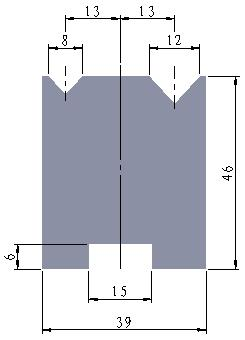
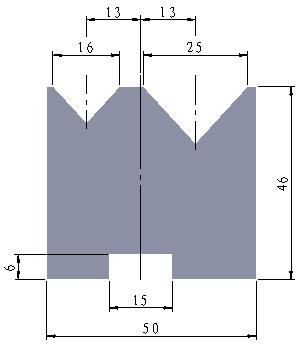
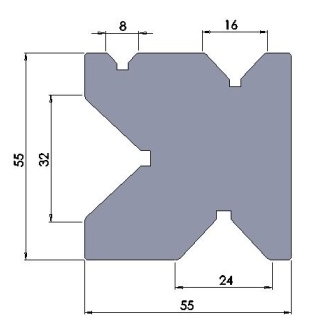
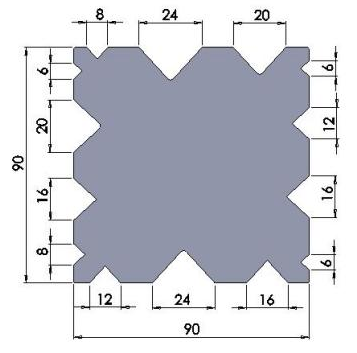
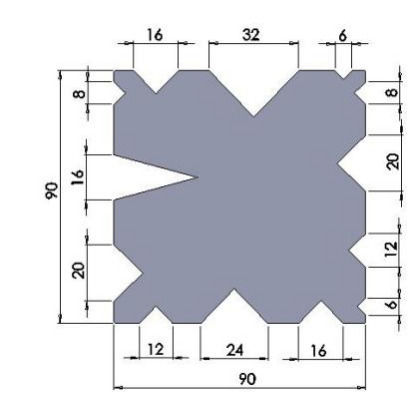
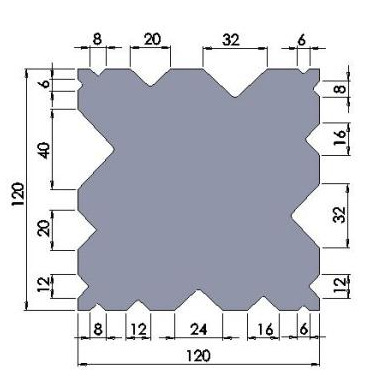
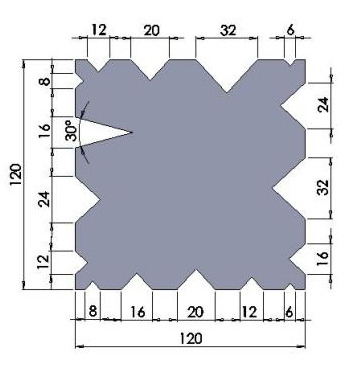
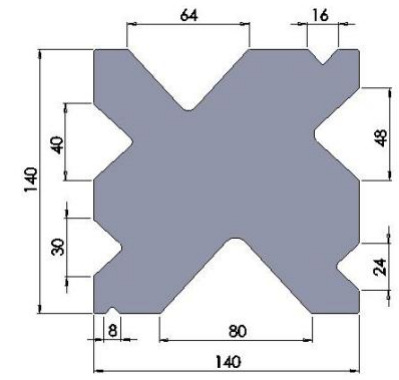
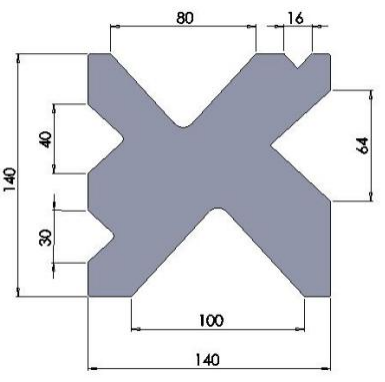
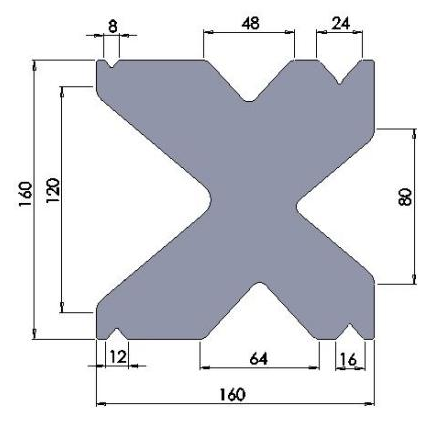
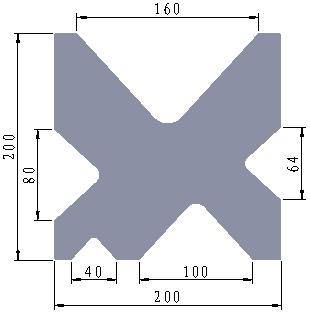
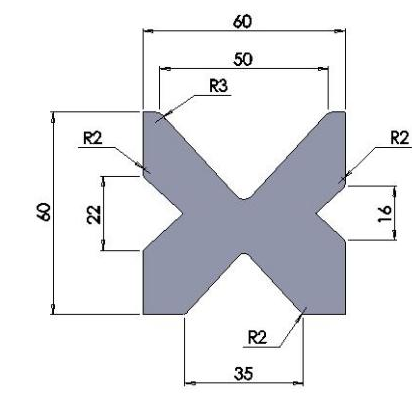
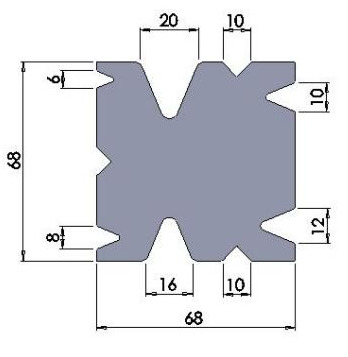
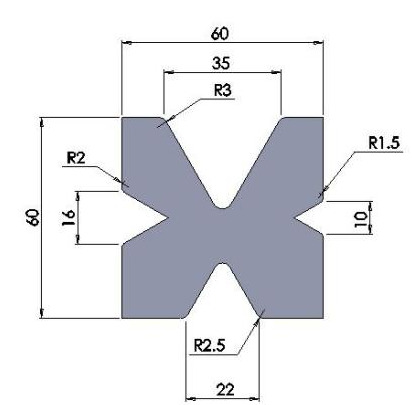
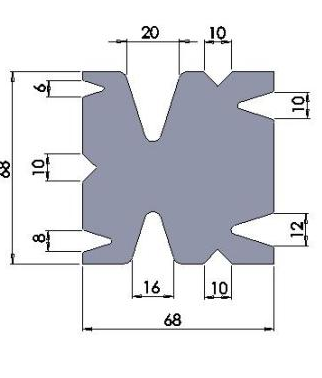
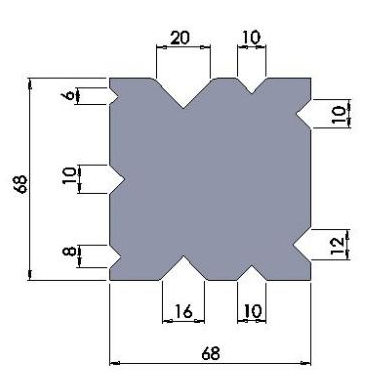
According to the number of mold slots, the lower die of the bending machine can be roughly divided into single V mold, double V mold, and multi-V mold. As the name suggests, the single V mold and double V mold have only one or two slots on the surface, and they are mostly used in CNC bending machines. They have high precision because they have a fixed benchmark, and we also call them concentric molds that can be interchanged. The multi-V lower mold is mostly a square mold, with several slots on all four surfaces, of different sizes. Its advantage is that it has many mold slots and can adapt to bending of various thicknesses of sheet metal.
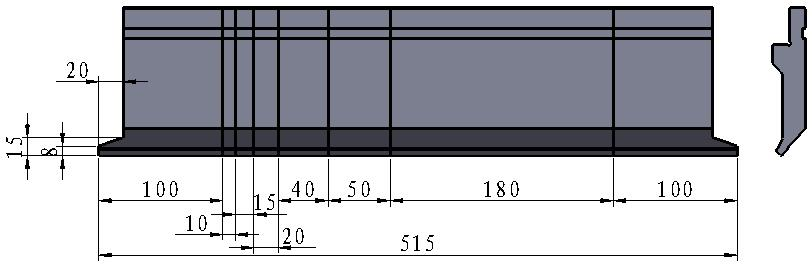
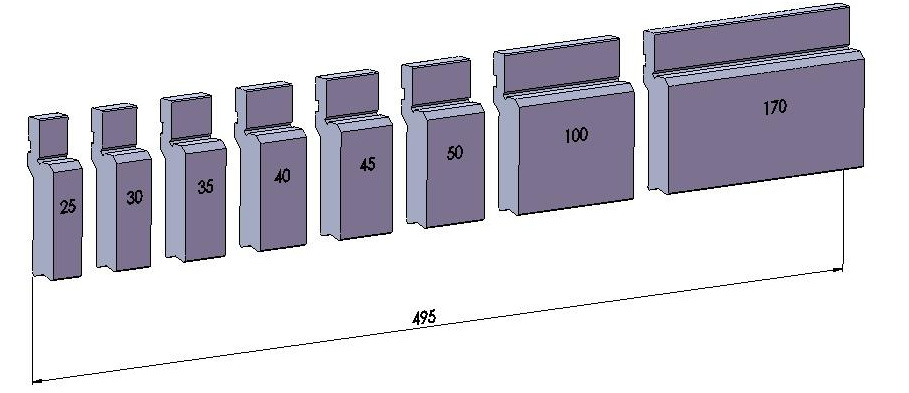
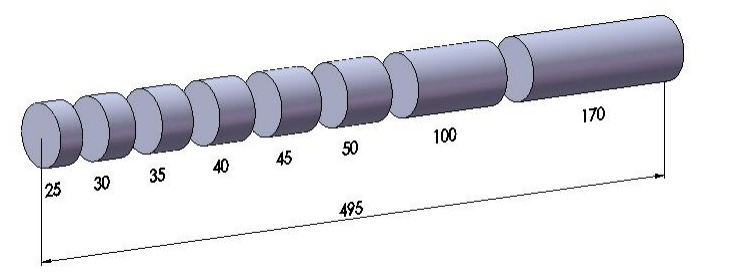
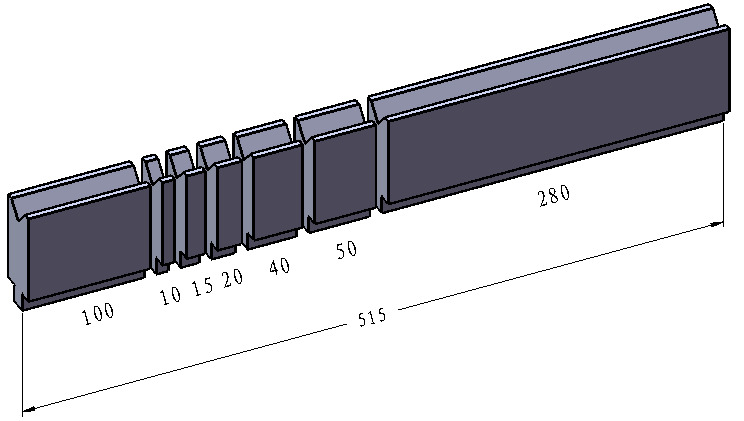
According to the composition form, bending machine tools can be divided into segmented tools and integral tools. Segmented tools are generally divided into 300mm, 200mm, 100mm, 50mm, 40mm, 20mm, 15mm, and 10mm for the upper mold, and 400mm, 200mm, 100mm, 50mm, 40mm, 20mm, 15mm, and 10mm for the lower mold. The integral tools are generally 835mm for both the upper and lower tools.
List and introduction of common tools:
This passage describes various types of molds used for metal sheet bending, as well as their advantages and applications.
Upper molds include: sharp knife upper mold, flattening knife mold, R-shaped knife mold, and avoidance upper mold.
Lower molds include: 1V, 2V, 3U, and 4V lower molds, UL rubber lower mold, hard rubber lower mold, lower mold guide, lower mold seat, section difference bending mold, forming bending mold, combination bending mold, and no-trace mold.
Common standard upper and lower molds: used for bending angles from 90° to 180°, with the advantages of being universal for thin and thick plates, durable, and widely applicable.
Sharp knife mold: used for bending angles from 20° to 180°, with the advantages of being able to bend smaller angles and sizes, having a smaller R curvature after bending, and having a sharp and beautiful edge.
Large bending mold (goose neck mold): also known as large bending knife, used for bending angles from 30° to 180°, with the advantages of being able to produce "U"-shaped products that cannot be completed by standard molds and sharp molds, and having a wide range of applications.
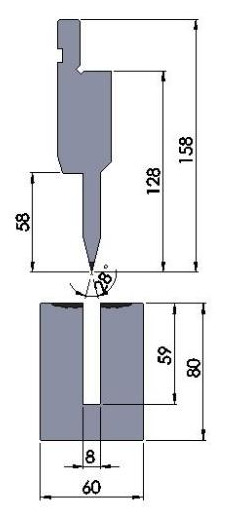
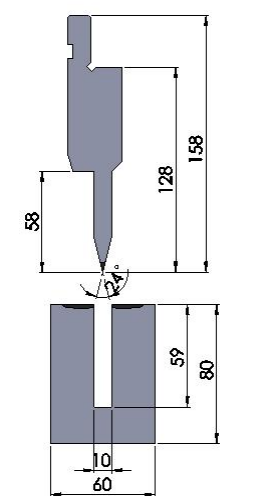
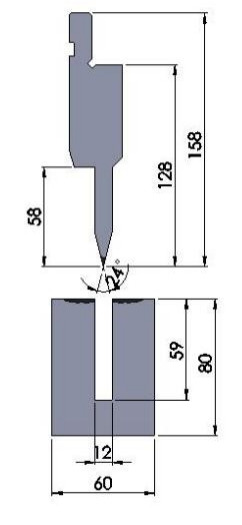
Flattening mold: used to flatten the edge of the workpiece, suitable for use with the sharp knife mold. First, use the sharp knife mold to bend the workpiece into an angle less than 45°, and then use the flattening mold to press it into a dead edge. It is mainly used for reinforcing the edge of the frame.
Section difference mold (also known as "Z" mold): mainly used for one-time bending of small-sized "Z"-shaped workpieces, divided into fixed and adjustable types.
Forming mold: (including circular arc mold, one-time forming mold for door frames, U-shaped forming, lamp post mold, etc.) is usually used for bending more complex products. It includes multiple bending angles and styles, and is designed as a one-time bending forming mold to improve bending accuracy and efficiency.
Coaxial mold: usually refers to the lower mold used with CNC bending machines, consisting of a mold holder and a segmented lower mold. Coaxial means that no matter which slot is used, it only needs to be changed to the specified slot, without the need to re-align the upper and lower molds. The mold change is very convenient, and the machining accuracy is high.
Inlaid lower mold is mainly used to improve the utilization of mold materials or for bending special materials.
Types of no-pressure lower molds include: ball-type, flip-type, and UL rubber no-pressure lower molds. The main advantage of the no-pressure lower mold is to avoid scratching, rubbing, and indentation on the surface of the material.
Adjustable opening lower mold has several types, including plug-in, dovetail, wedge, and rack. In addition to improving the utilization of mold materials, the adjustable opening lower mold greatly improves work efficiency, reduces mold change time and labor intensity.
The copyright of this article belongs to Wuxi SMART CNC Group Company, please indicate the original address for reprinting.
Standard punchs
Upper tooling fixtures
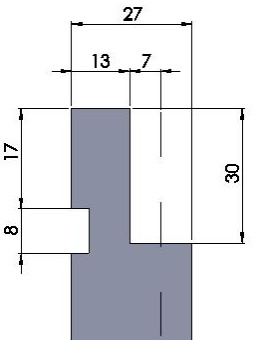
European type tooling
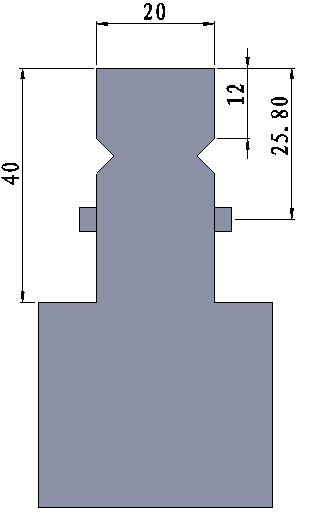
WILA type tooling
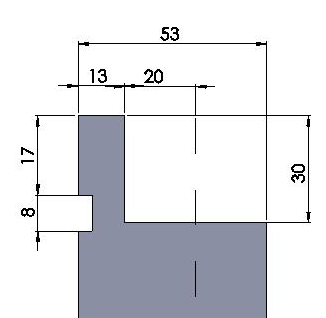
European type tooling
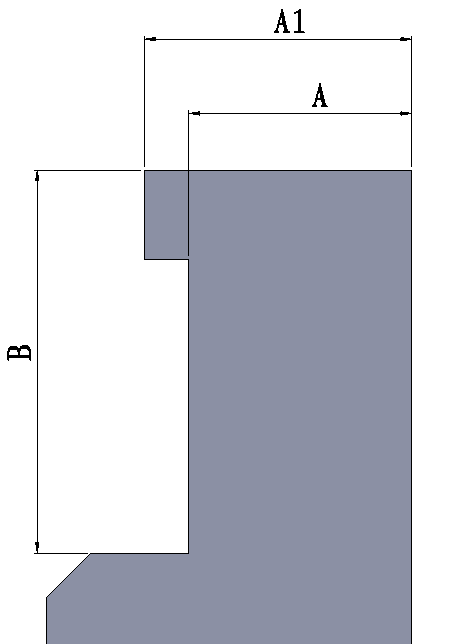
Heavy-duty direct-link type
Segmentation of punch
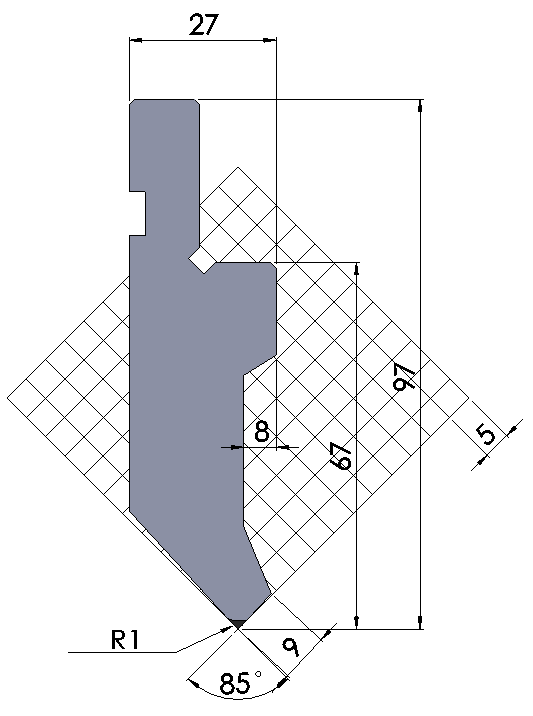
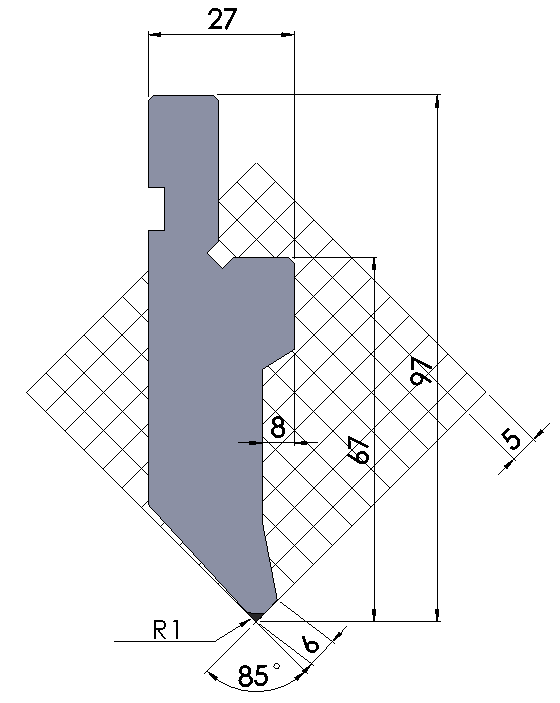
Standard punchs 85°
10.100
Max Tons:100t/m
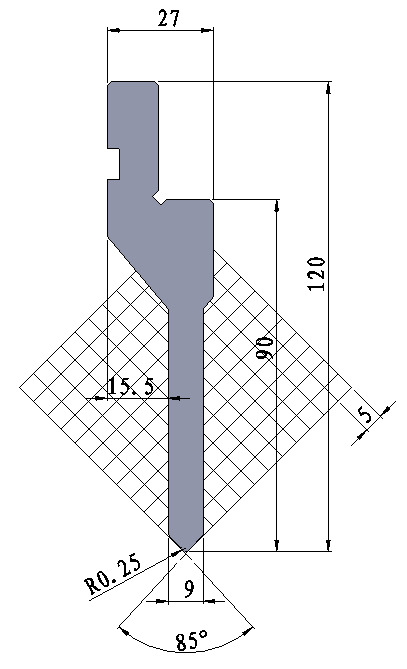
10.103
Max Tons:80t/m
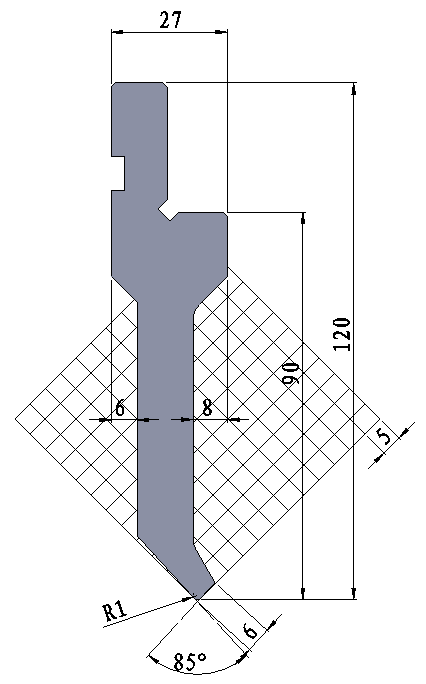
10.106
Max Tons:50t/m
10.101
Max Tons:80t/m
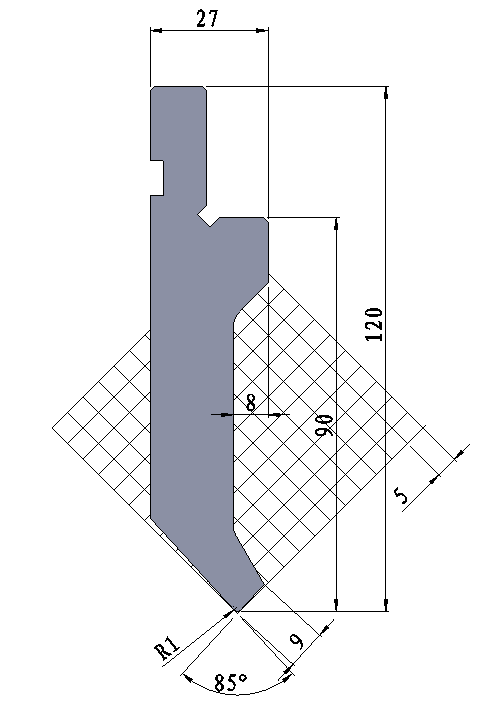
10.104
Max Tons:100t/m
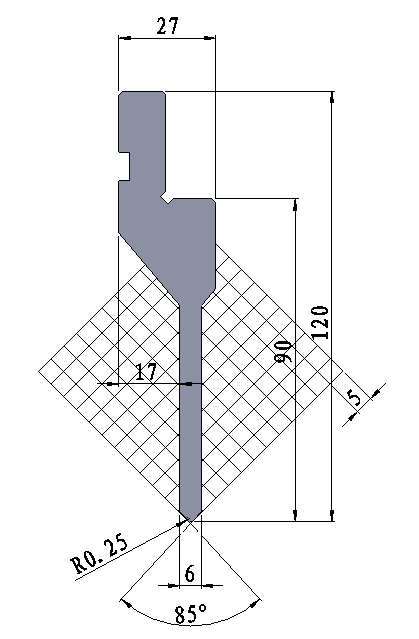
10.107
Max Tons:50t/m
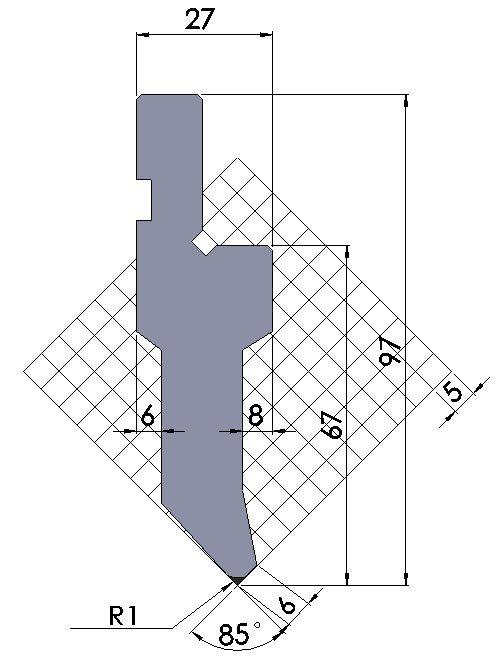
10.102
Max Tons:60t/m
10.105
Max Tons:80t/m
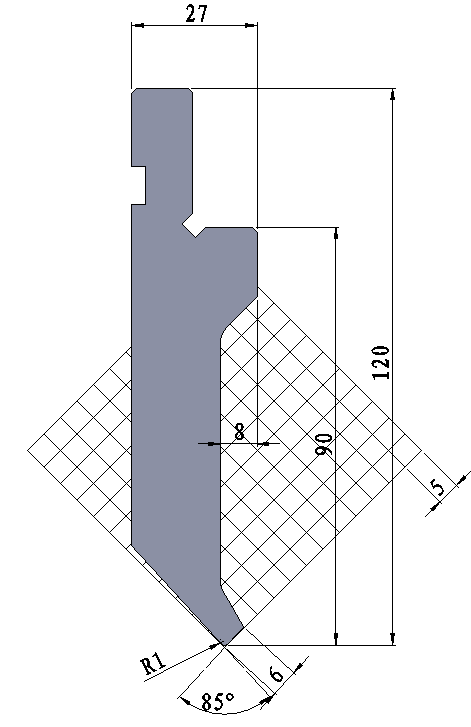
10.108
Max Tons:100t/m
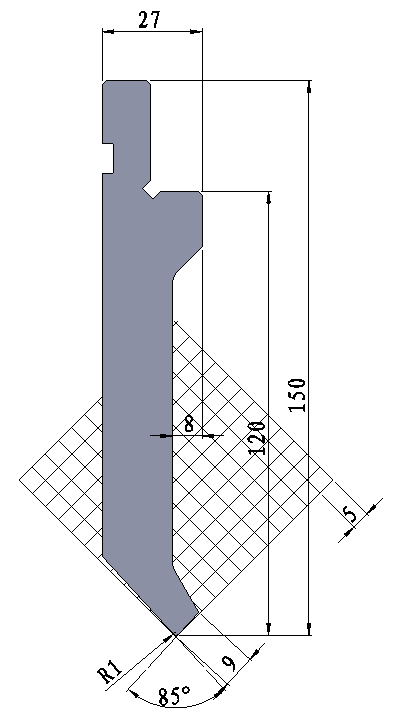
Standard punchs 85°
10.109
Max Tons:80t/m
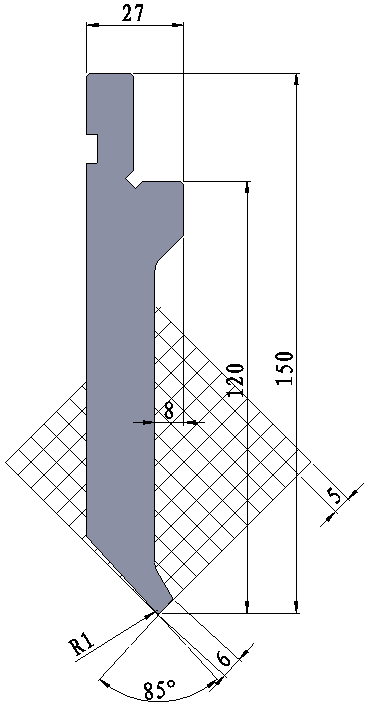
10.112
Max Tons:70t/m
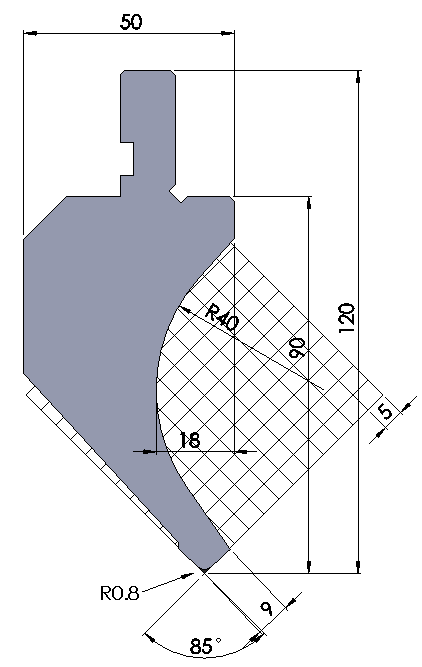
10.115
Max Tons:50t/m
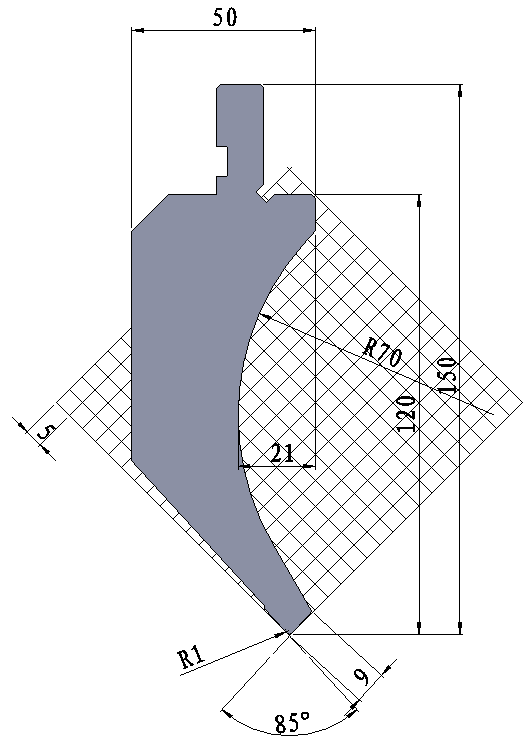
10.110
Max Tons:40t/m
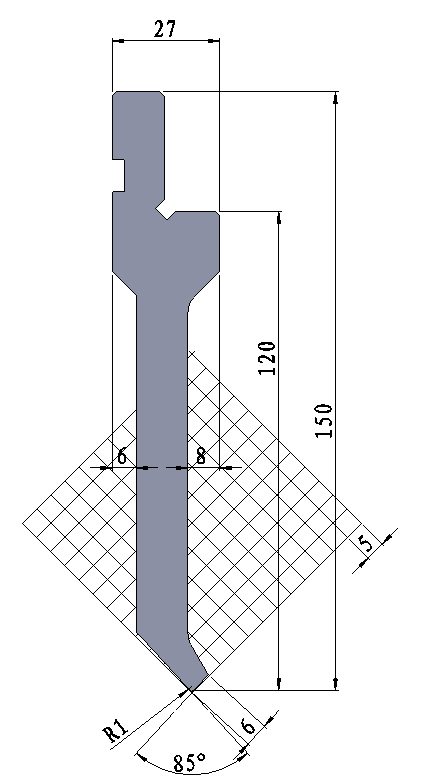
10.113
Max Tons:40t/m
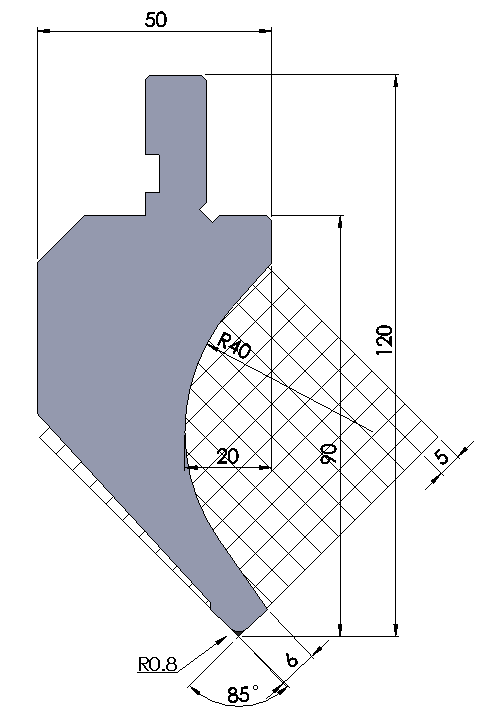
10.116
Max Tons:60t/m
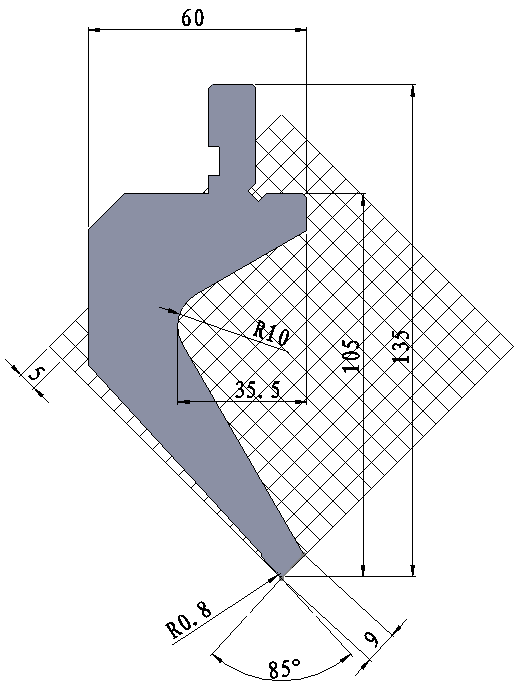
10.111
Max Tons:80t/m
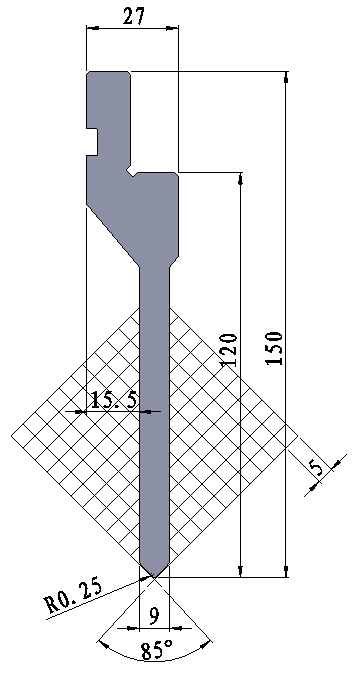
10.114
Max Tons:50t/m
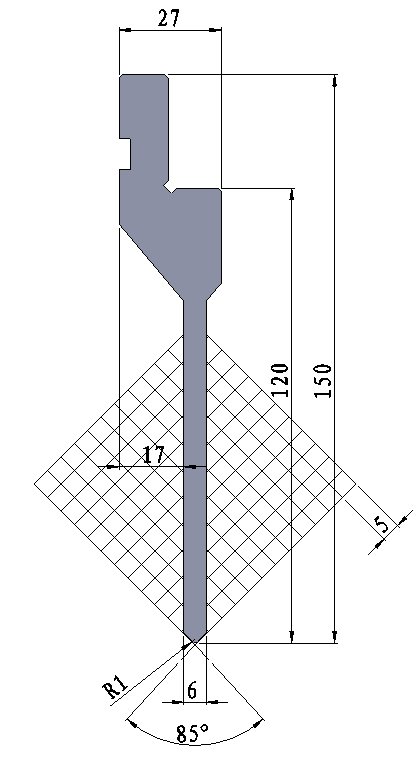
10.117
Max Tons:45t/m
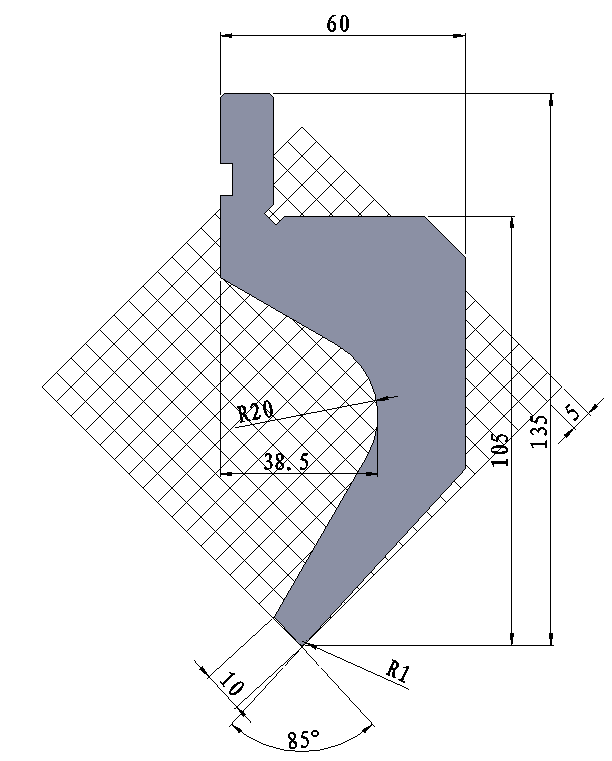
Standard punchs 85°
10.118
Max Tons:100t/m
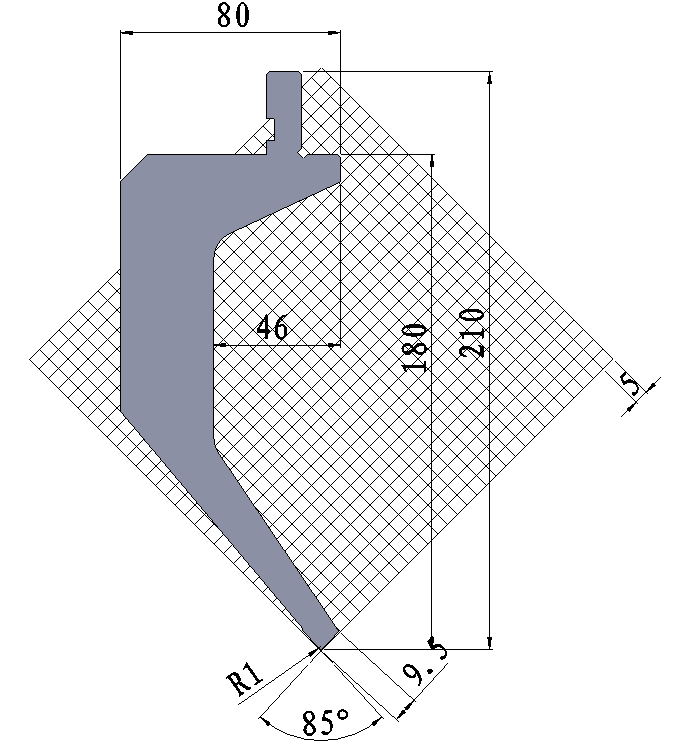
10.119
Max Tons:80t/m
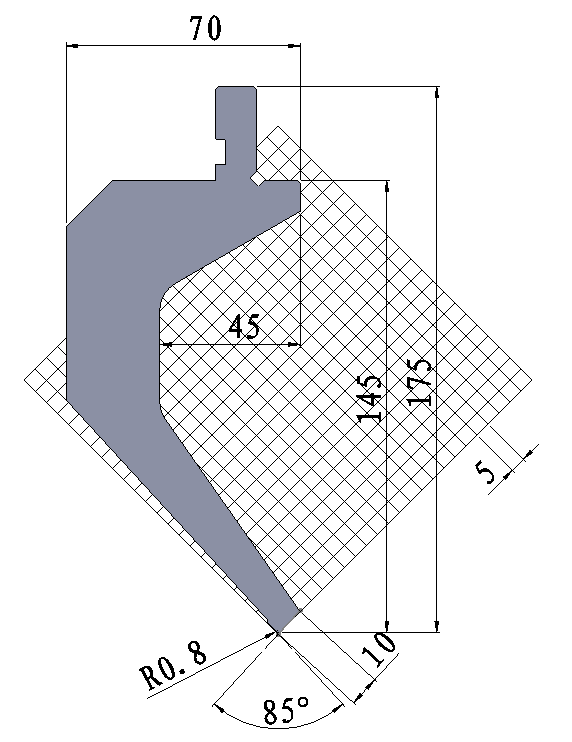
10.120
Max Tons:60t/m
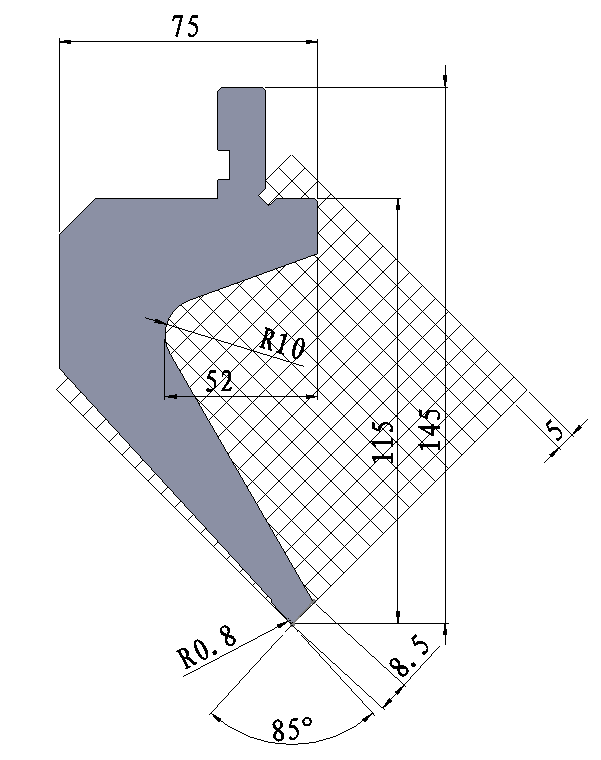
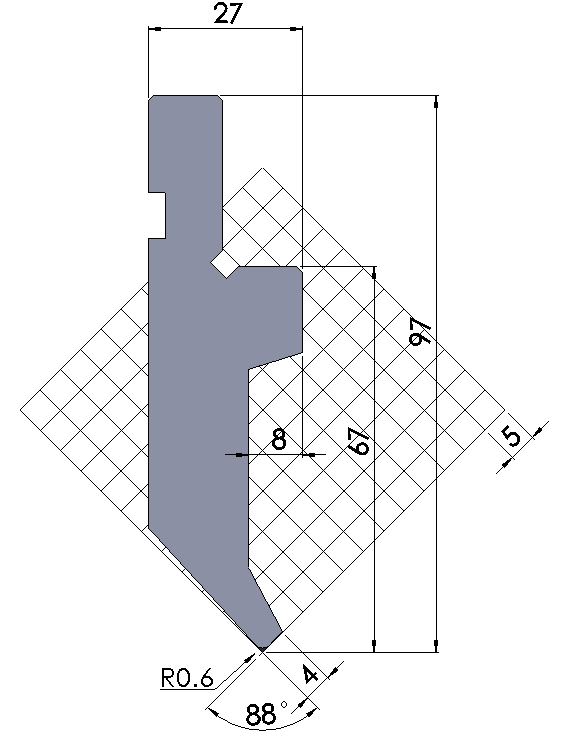
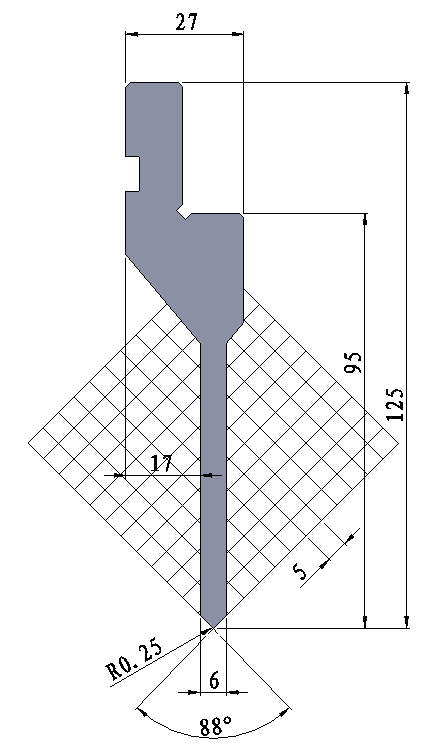
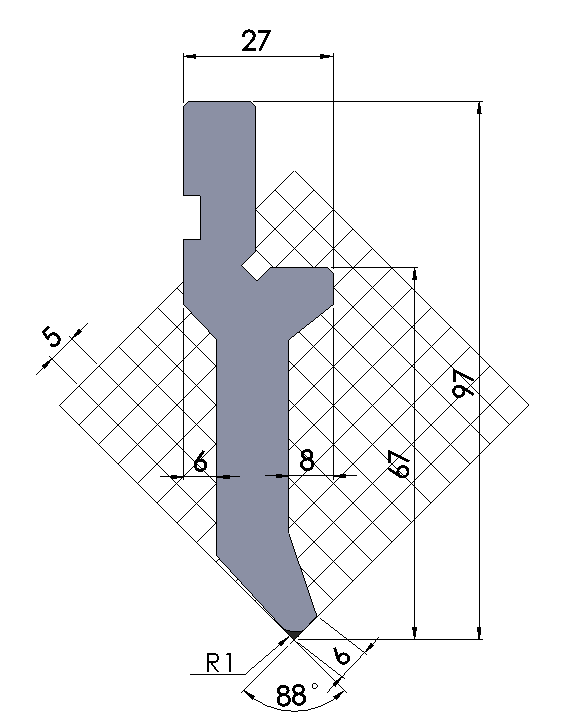
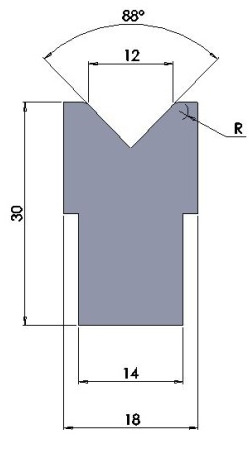
Standard punchs 88°
10.130
Max Tons:100t/m
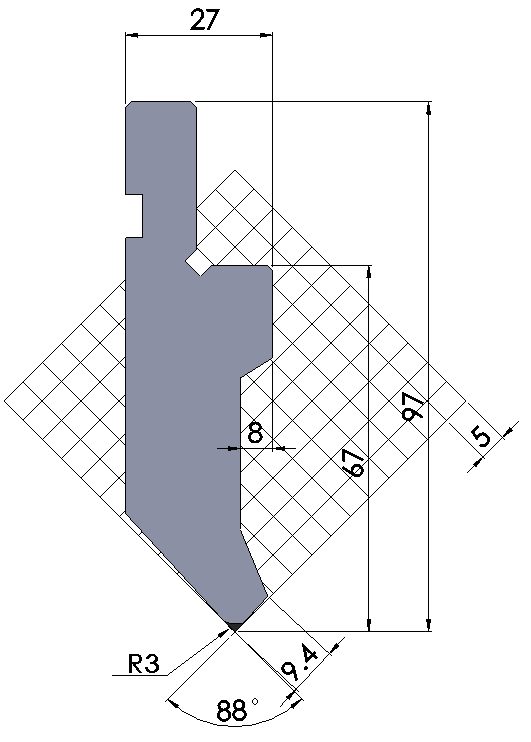
10.133
Max Tons:100t/m
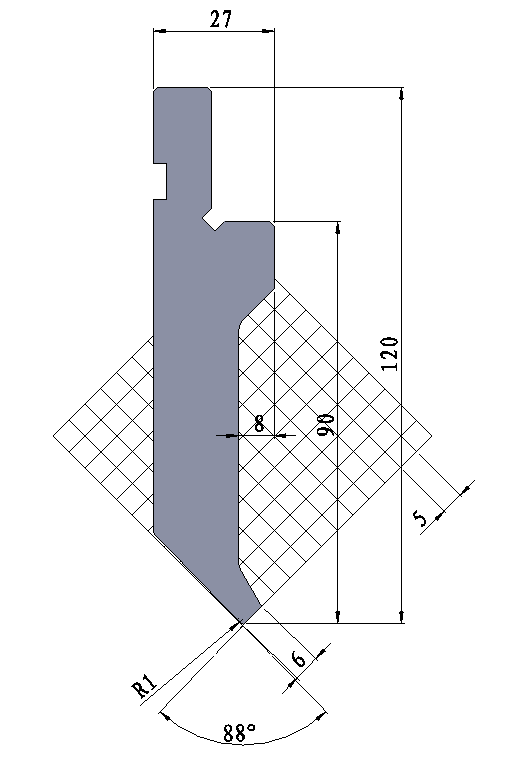
10.131
Max Tons:80t/m
10.134
Max Tons:50t/m
10.132
Max Tons:60t/m
10.135
Max Tons:20t/m
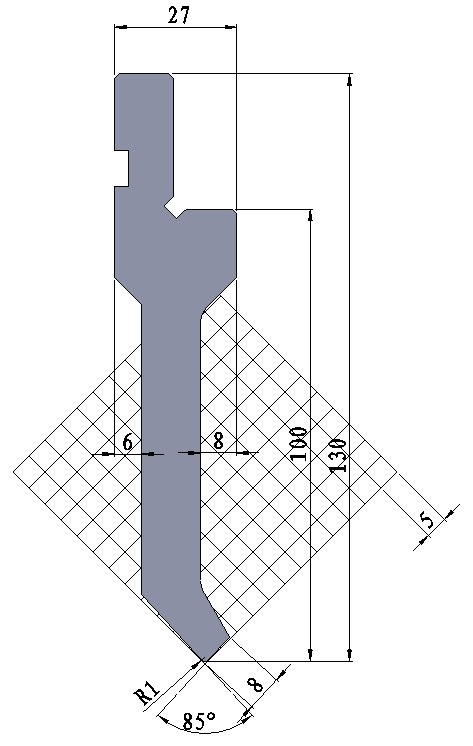
Standard punchs 88°
10.136
Max Tons:80t/m
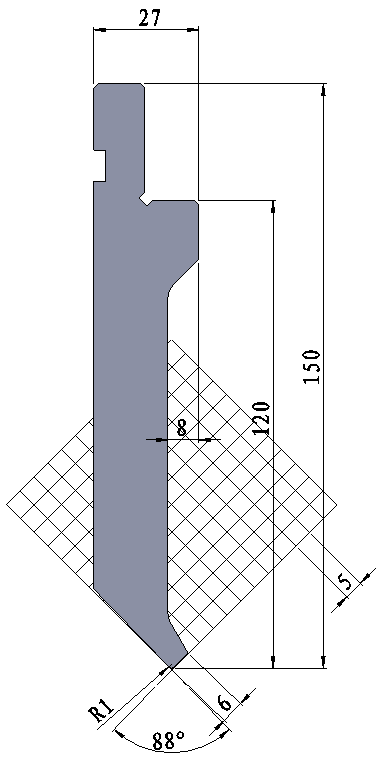
10.139
Max Tons:70t/m
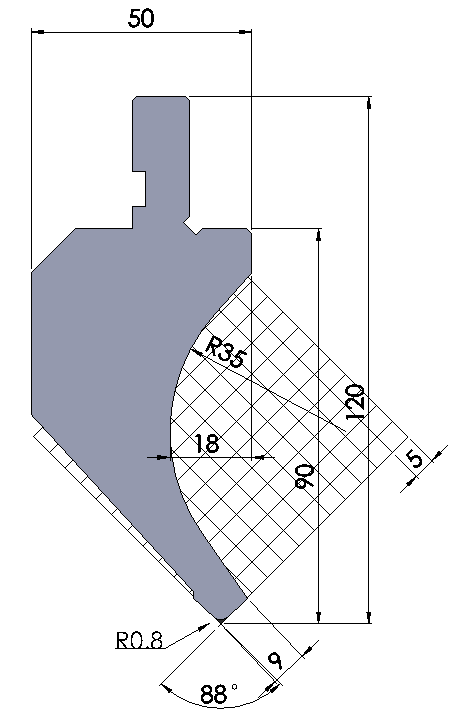
10.142
Max Tons:30t/m
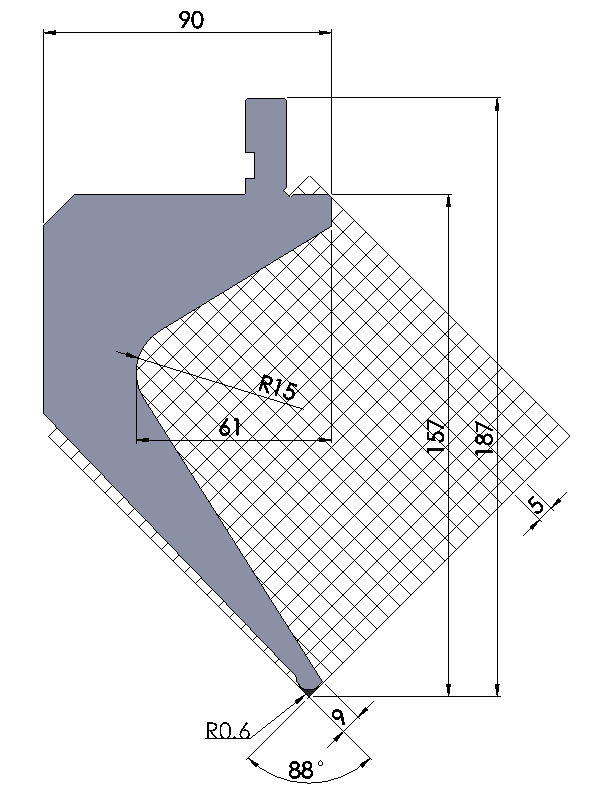
10.137
Max Tons:45t/m
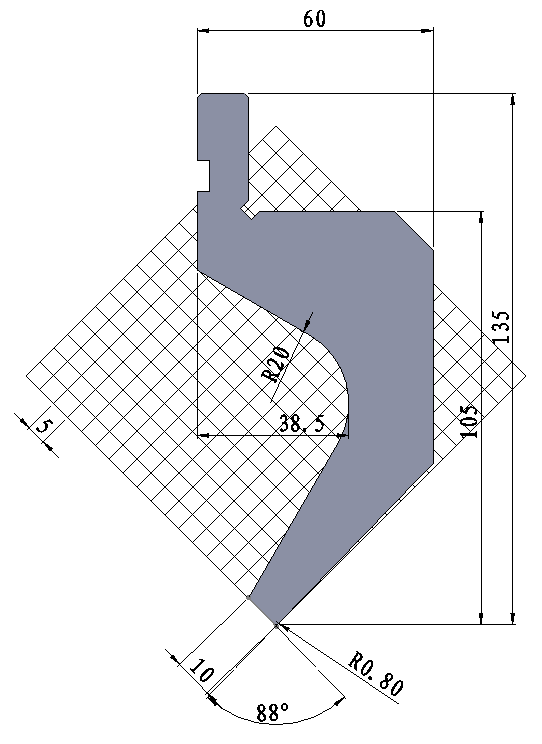
10.140
Max Tons:50t/m
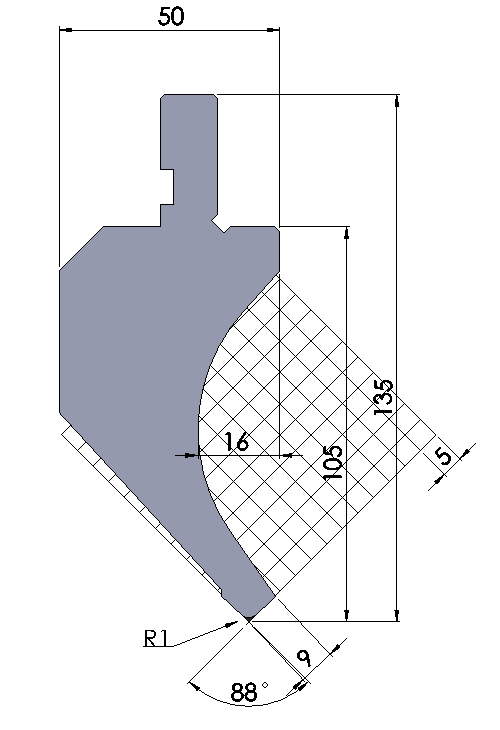
10.143
Max Tons:20t/m
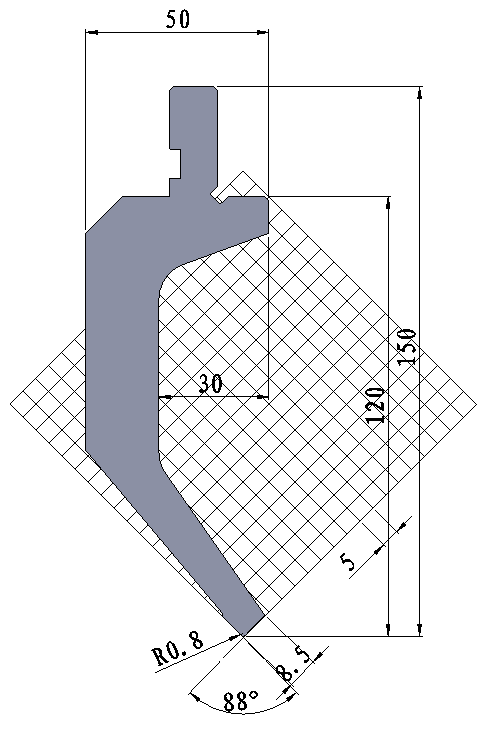
10.138
Max Tons:20t/m
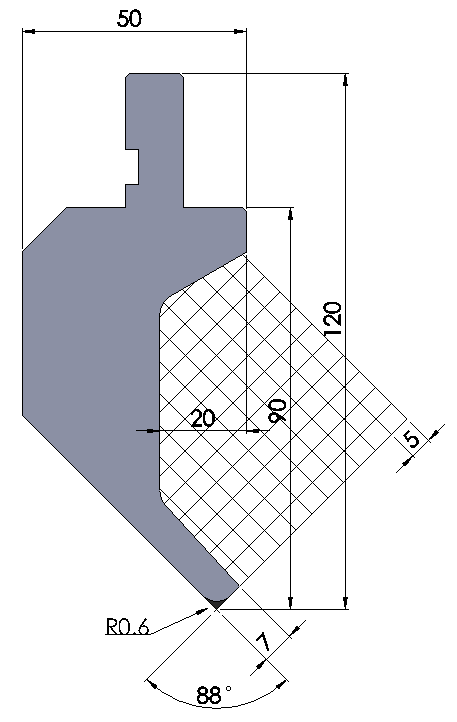
10.141
Max Tons:50t/m
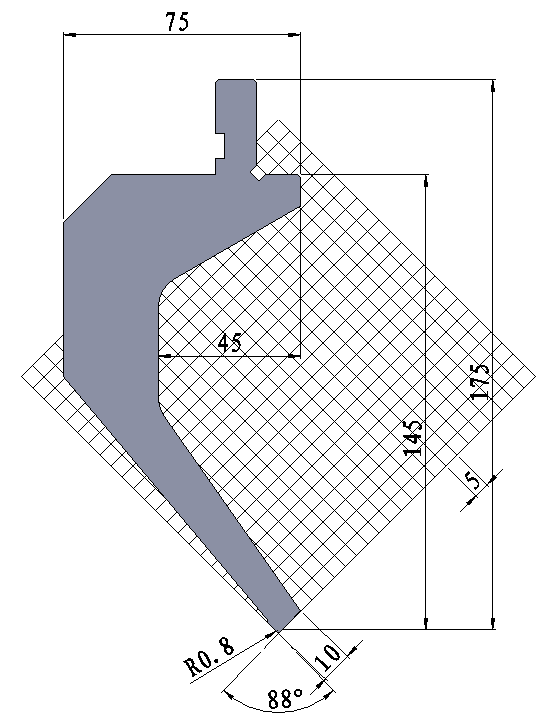
10.144
Max Tons:50t/m
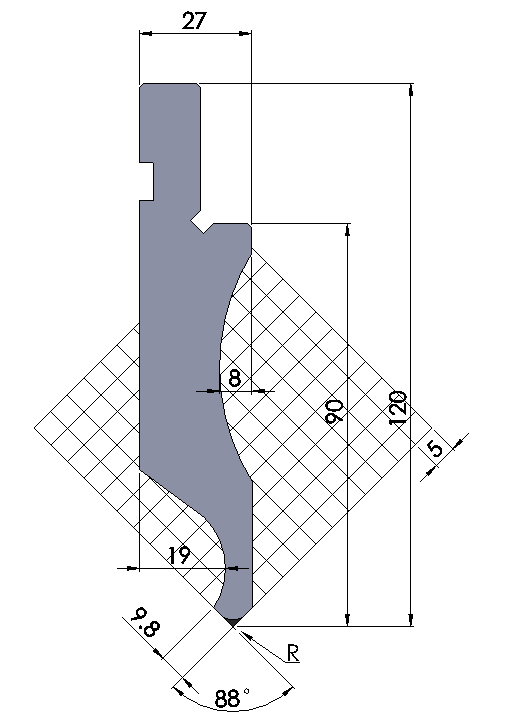
Standard punchs 90°
10.150
Max Tons:100t/m
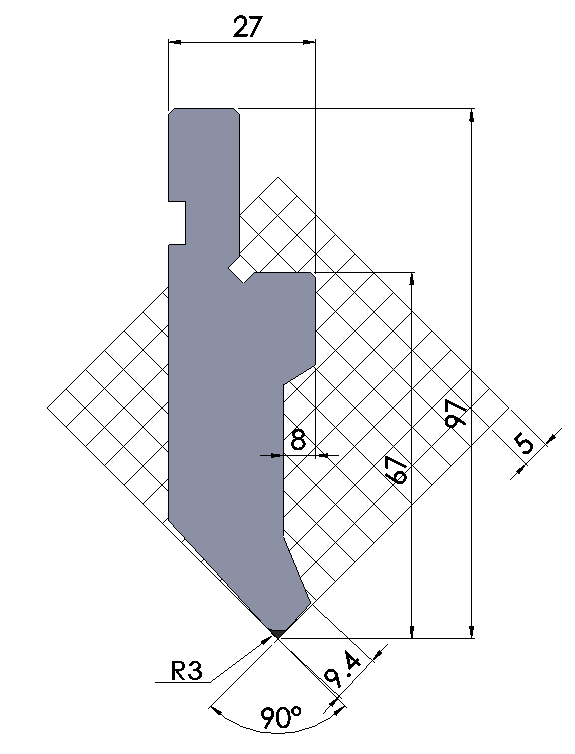
10.153
Max Tons:80t/m
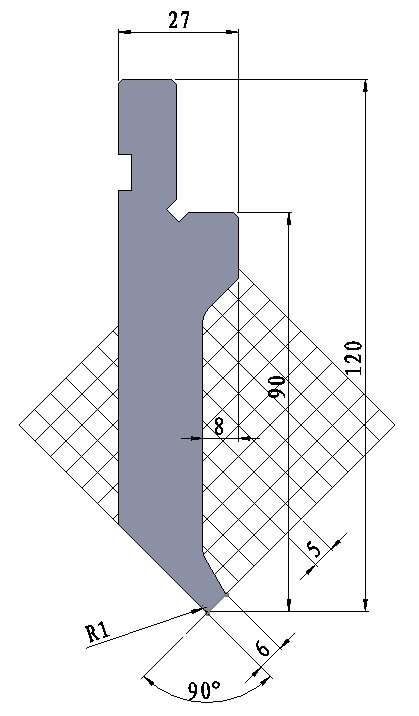
10.156
Max Tons:60t/m
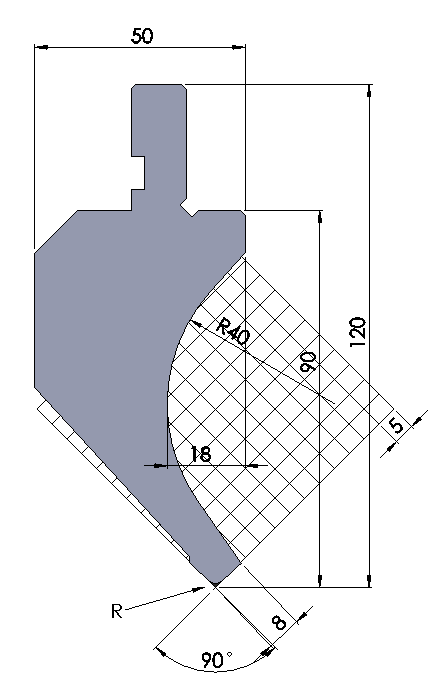
10.151
Max Tons:35t/m
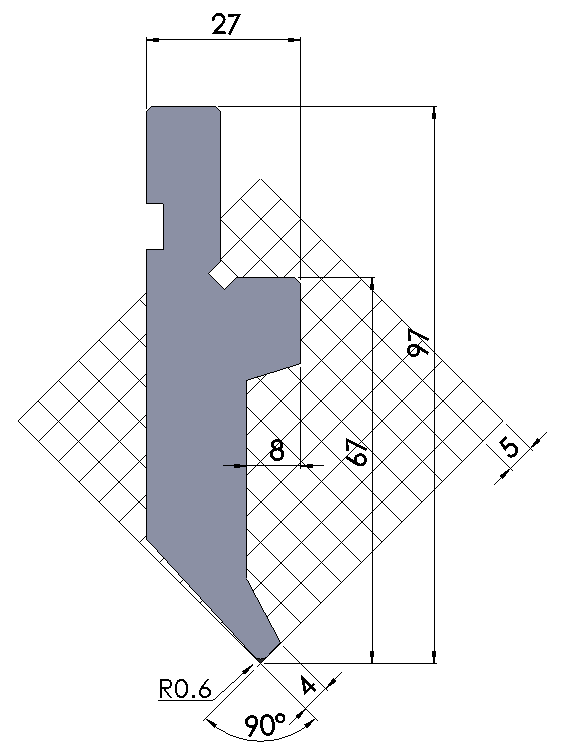
10.154
Max Tons:20t/m
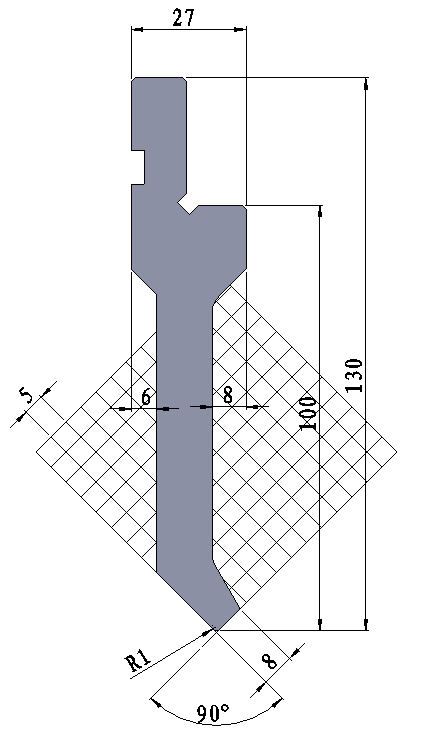
10.157
Max Tons:20t/m
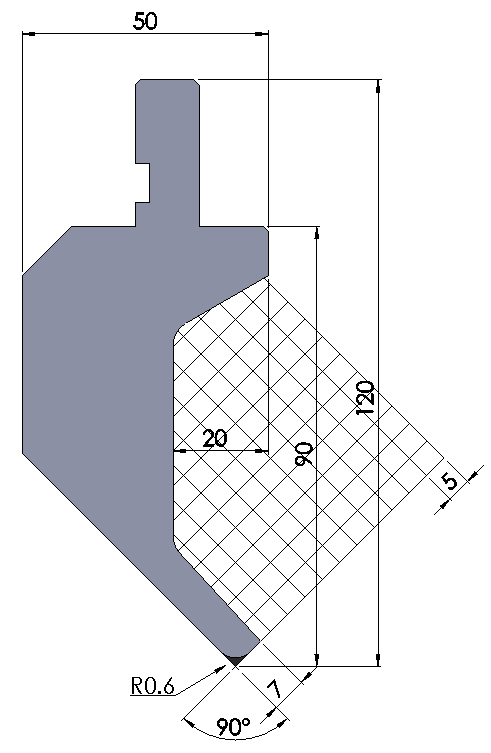
10.152
Max Tons:80t/m
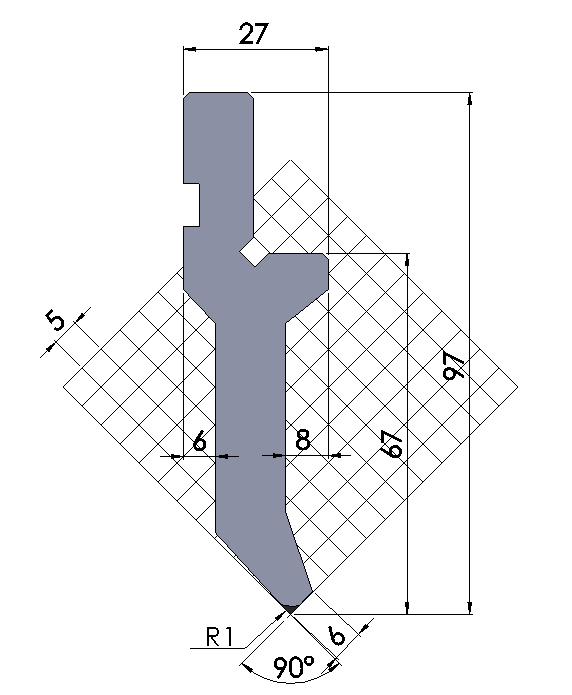
10.155
Max Tons:50t/m
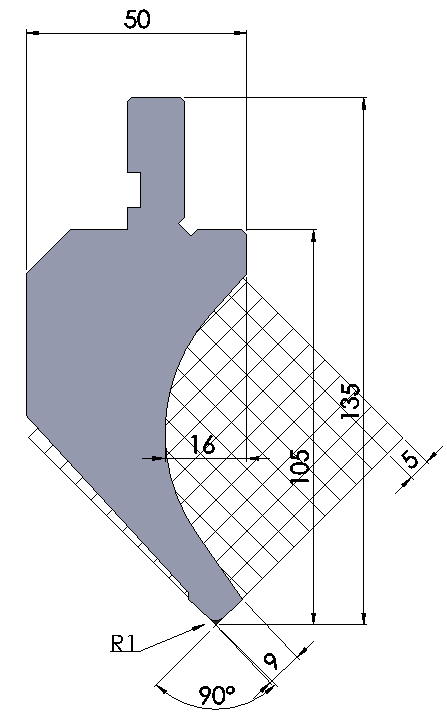
10.158
Max Tons:50t/m
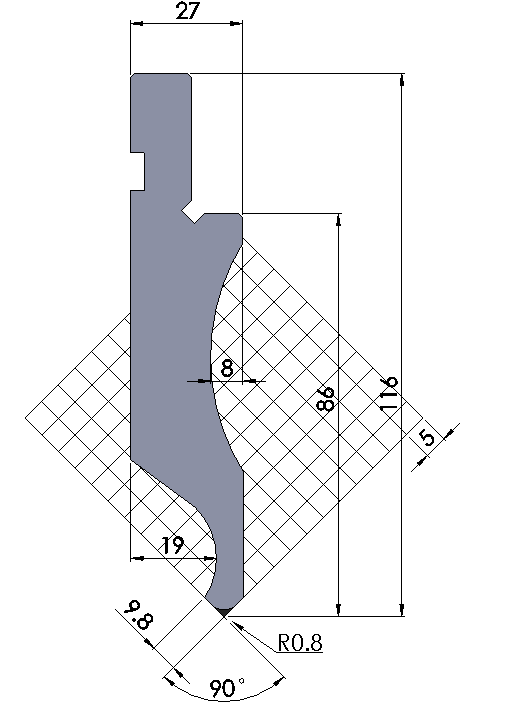
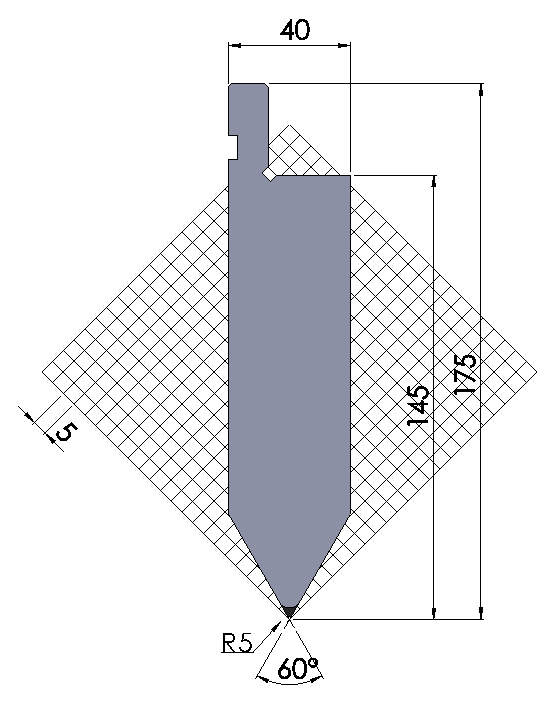
Standard punchs 60°
10.170
Max Tons:80t/m
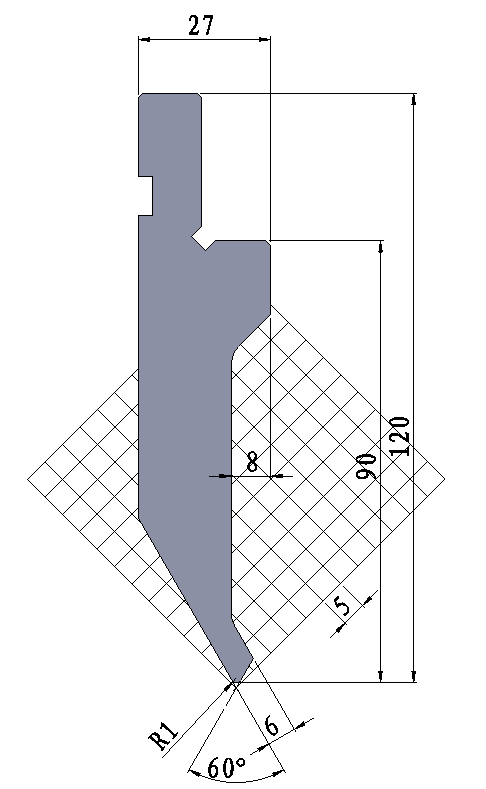
10.173
Max Tons:100t/m
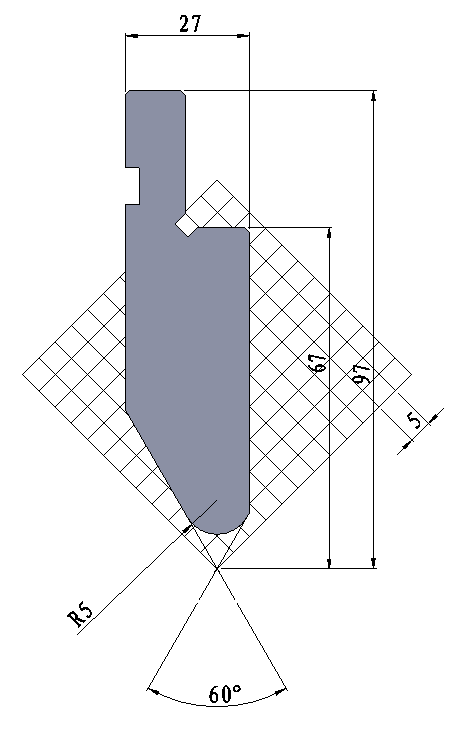
10.176
Max Tons:160t/m
10.171
Max Tons:80t/m
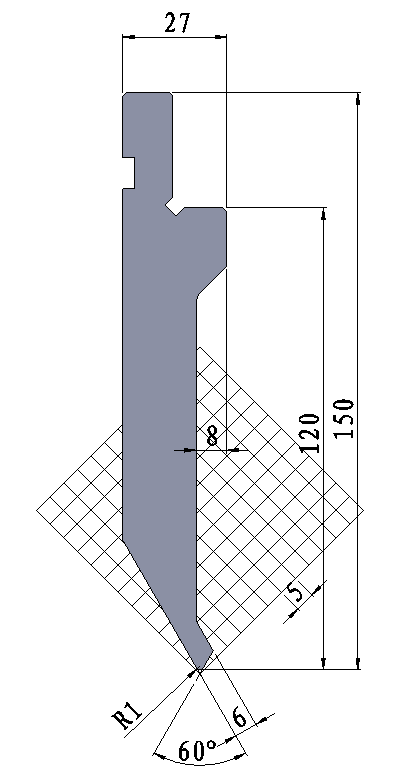
10.174
Max Tons:100t/m
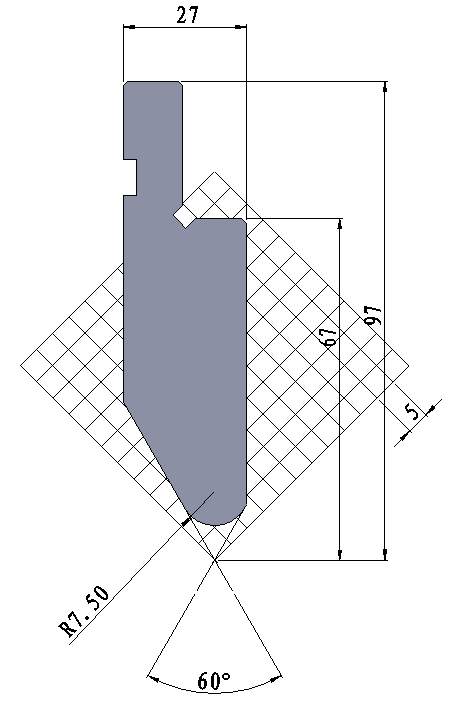
10.177
Max Tons:60t/m
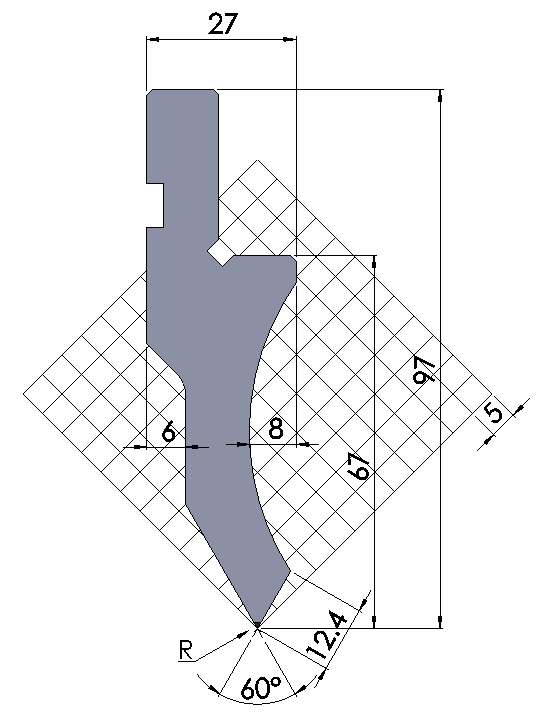
10.172
Max Tons:40t/m
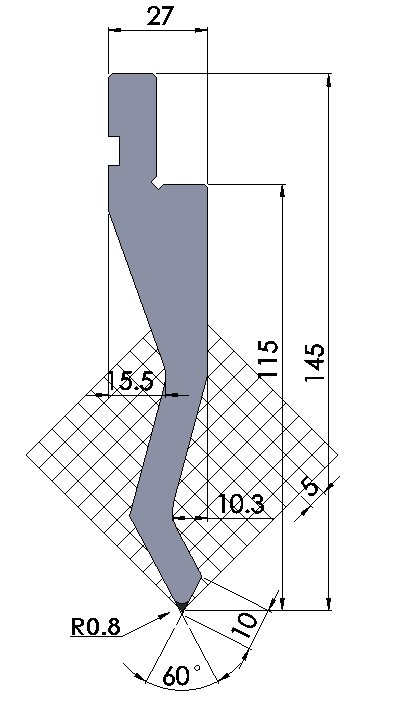
10.175
Max Tons:60t/m
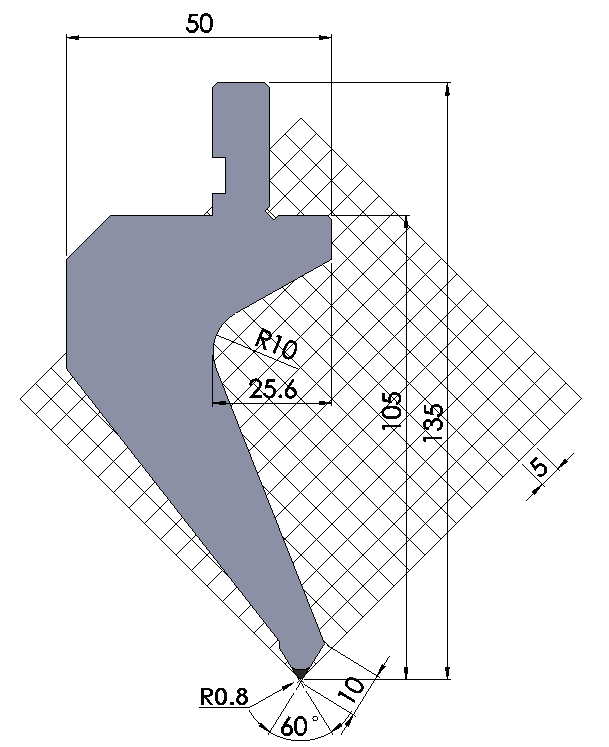
10.178
Max Tons:40t/m
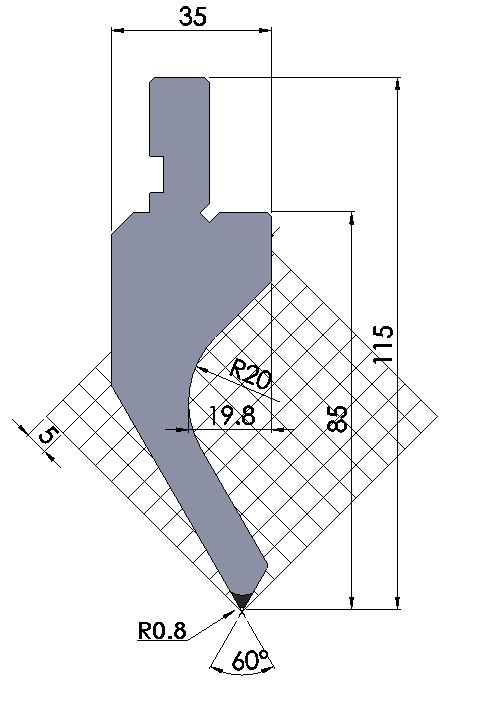
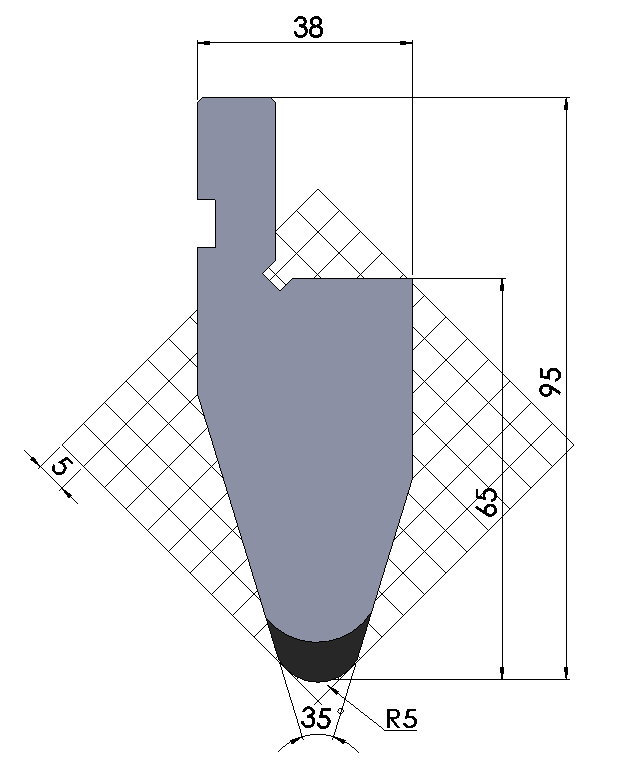
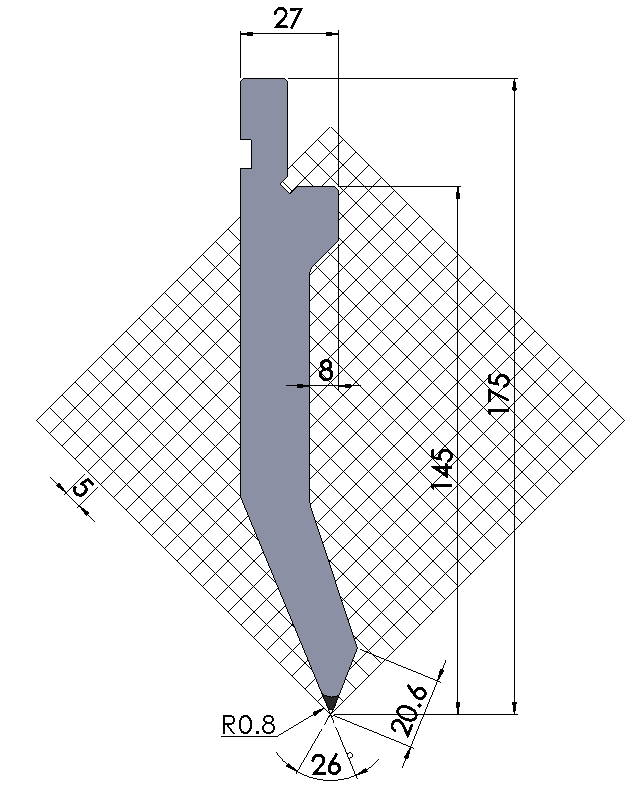
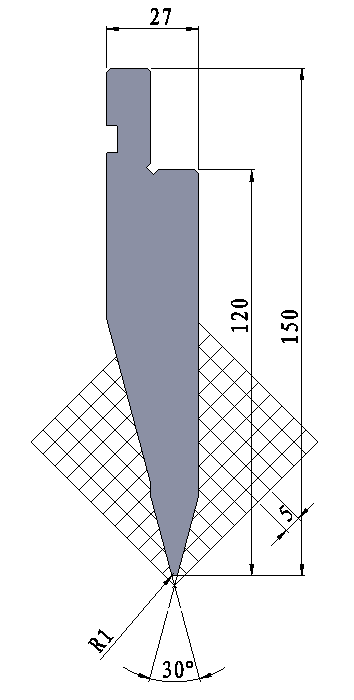
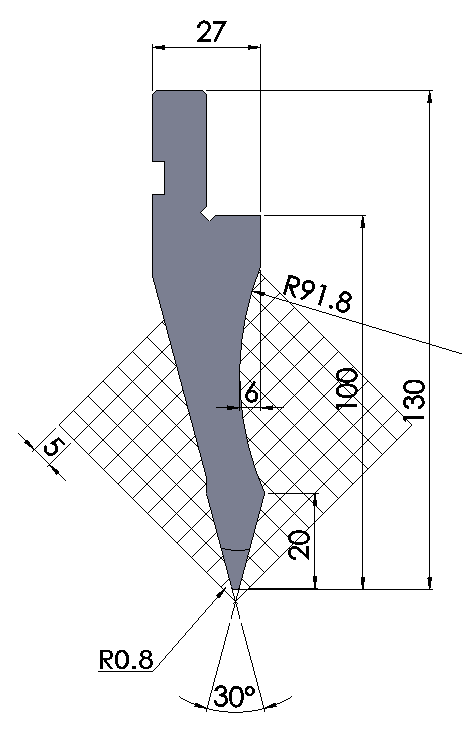
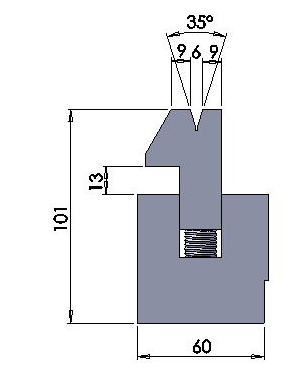
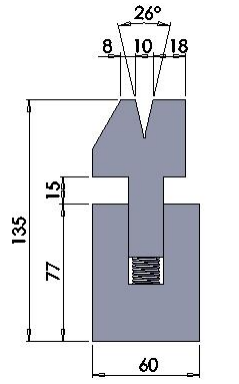
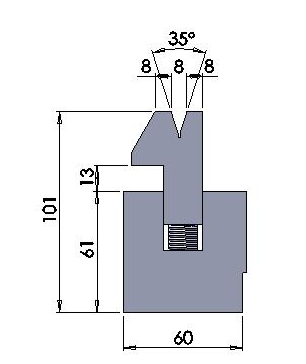
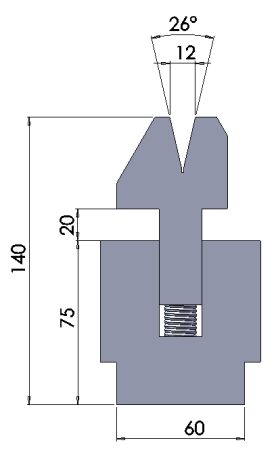
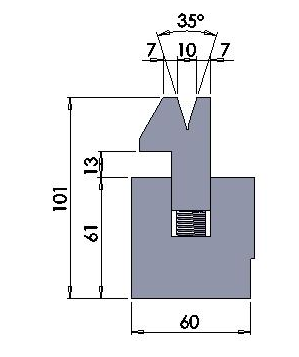
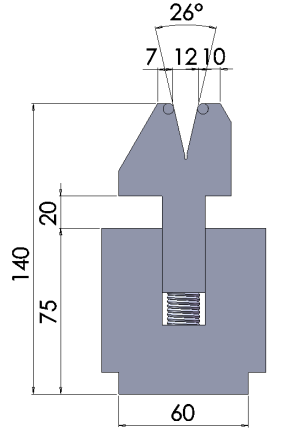
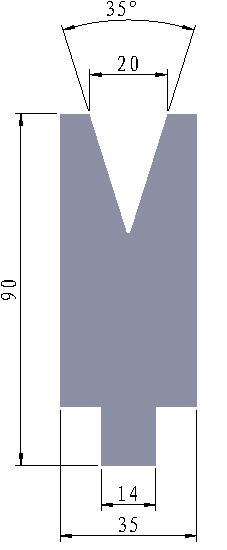
Standard punchs 26°30°35°
10.190
Max Tons:80t/m
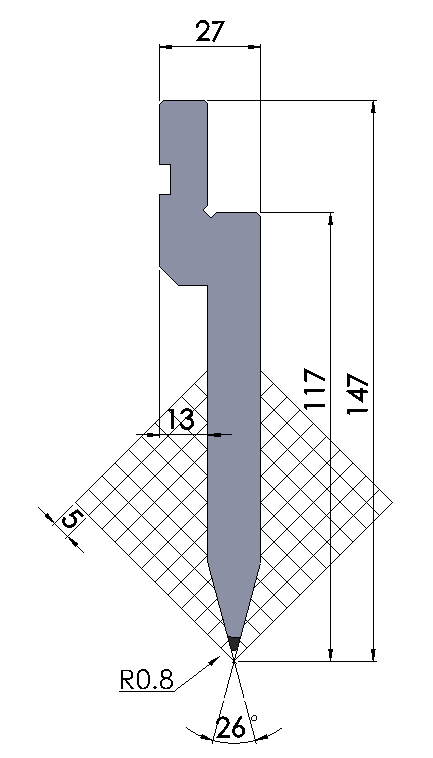
10.193
Max Tons:70t/m
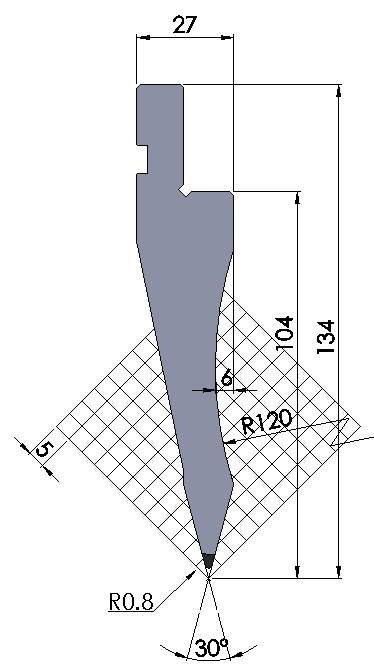
10.196
Max Tons:80t/m
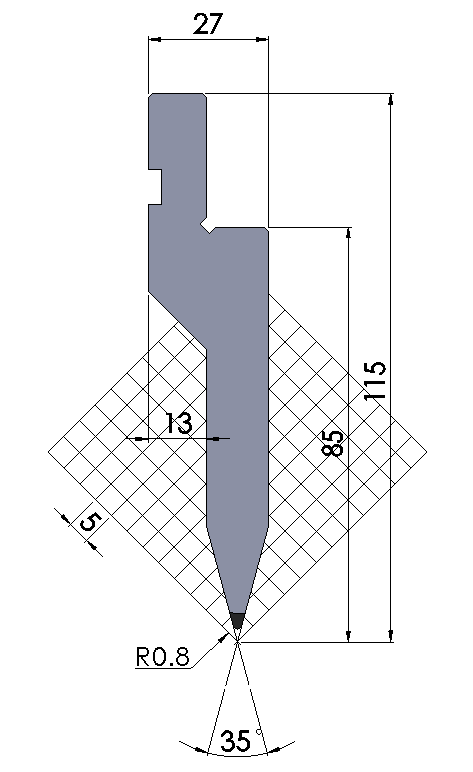
10.191
Max Tons:80t/m
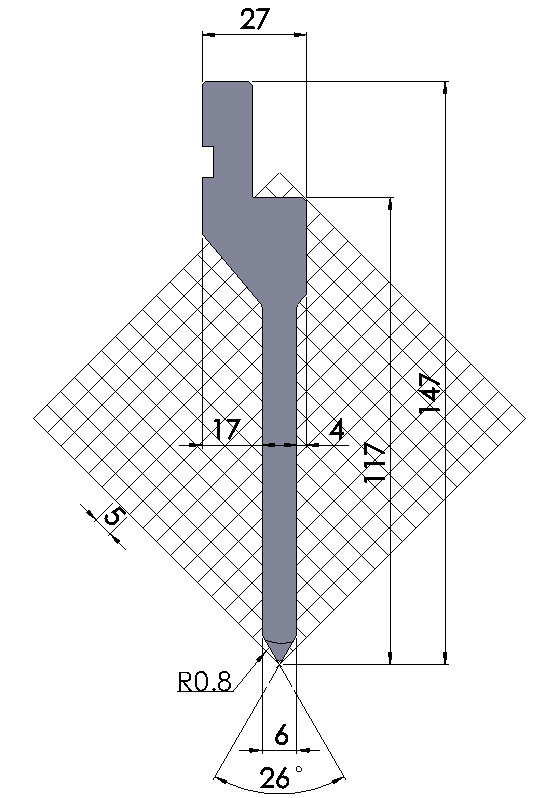
10.194
Max Tons:100t/m
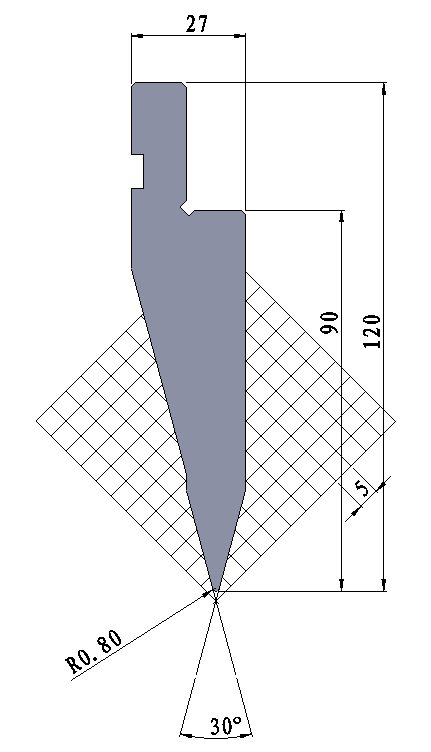
10.197
Max Tons:160t/m
10.192
Max Tons:90t/m
10.195
Max Tons:100t/m
10.198
Max Tons:70t/m
Standard R-type round tooling
10.210
Max Tons:100t/m
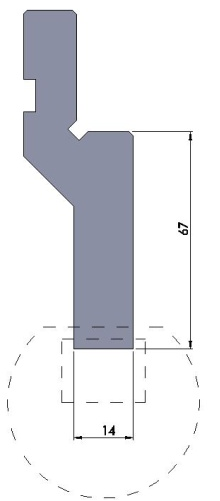
10.211
Max Tons:100t/m
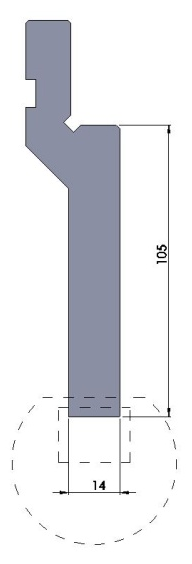
10.212
Max Tons:80t/m
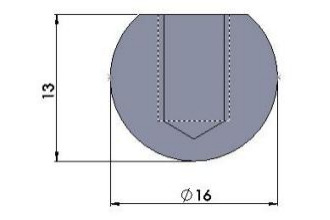
10.213
Max Tons:80t/m
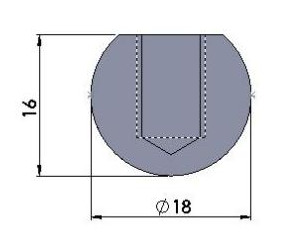
10.216
Max Tons:80t/m
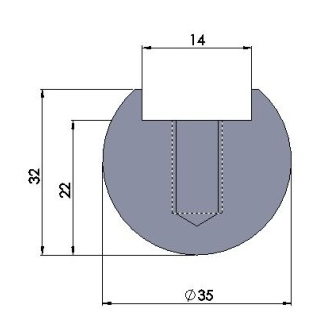
Standard R-type round tooling
10.214
Max Tons:80t/m
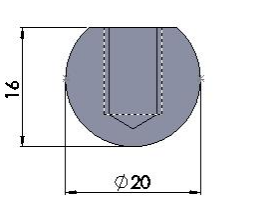
10.217
Max Tons:80t/m
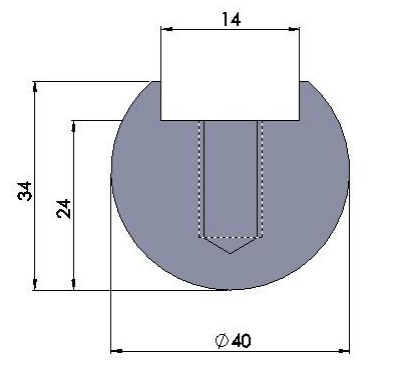
10.215
Max Tons:80t/m
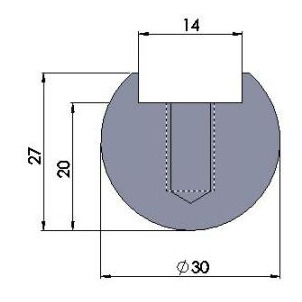
10.218
Max Tons:80t/m
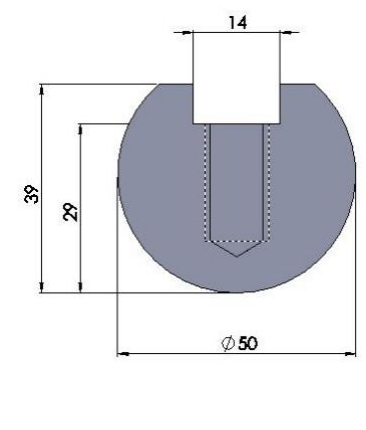
10.219
Max Tons:80t/m
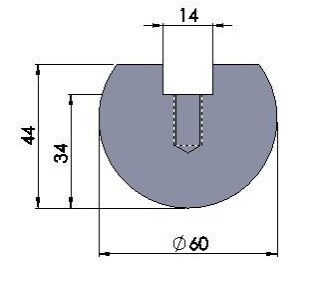
10.220
Max Tons:80t/m

10.221
Max Tons:80t/m

10.222
Max Tons:80t/m
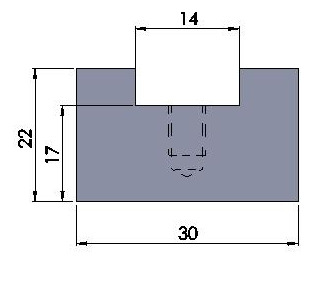
.png "10.222(2)")
.jpg "10.222(3)")
10.230
Max Tons:80t/m
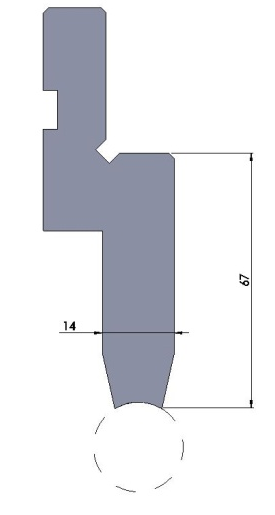
.png "10.230(2)")
Header | Header | Rmm | Header | Rmm |
|---|---|---|---|---|
10.231 | R3 | 3 | R5.5 | 5.5 |
10.232 | R3.5 | 3.5 | R6 | 6 |
10.233 | R4 | 4 | R6.5 | 6.5 |
10.234 | R4.5 | 4.5 | R7 | 7 |
10.235 | R5 | 5 | R7.5 | 7.5 |
Standard round tooling
10.240
Max Tons:100t/m
10.241
Max Tons:100t/m
Header | Header | Rmm | Header | Rmm |
|---|---|---|---|---|
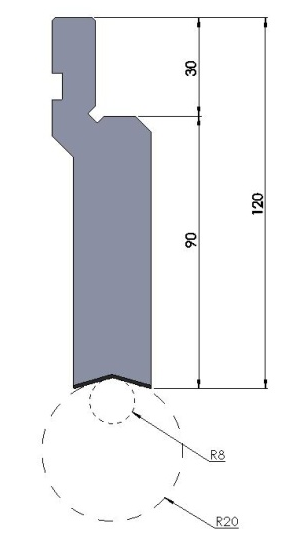
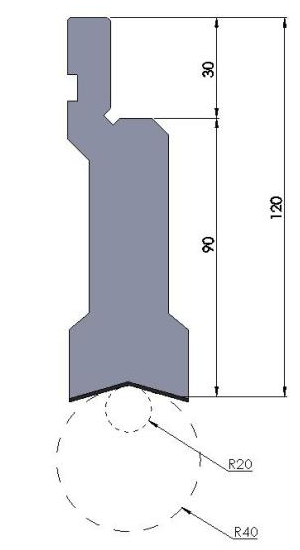
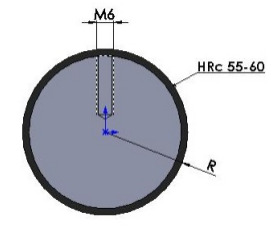
10.242 | R8 | 8 | R20 | 20 |
10.243 | R10 | 10 | R25 | 25 |
10.244 | R12.5 | 12.5 | R30 | 30 |
10.245 | R15 | 15 | R35 | 35 |
10.246 | R17.5 | 17.5 | R40 | 40 |
Flattening tooling(hemming tools)
10.250+20.134
10.250 Max Tons:A 80t/m B 100t/m
20.134 Max Tons:A 50t/m B 100t/m
10.251+20.135
10.251 Max Tons:A 80t/m B 100t/m
20.135 Max Tons:A 50t/m B 100t/m
10.252+20.136
10.252 Max Tons:A 80t/m B 100t/m
20.136 Max Tons:A 50t/m B 100t/m
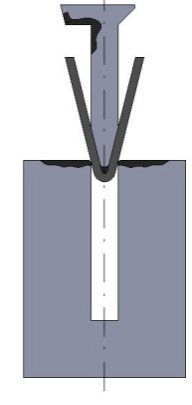
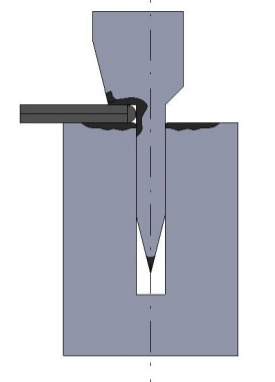
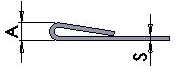
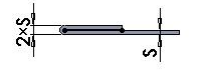
s mm | A | 450Mpa t/m | 700Mpa t/m | s mm | A mm | 450Mpa t/m | 700Mpa t/m |
|---|---|---|---|---|---|---|---|
0.6 | 3.0 | 9 | 15 | 0.6 | 1.2 | 23 | 35 |
0.8 | 3.0 | 12 | 20 | 0.8 | 1.6 | 32 | 50 |
1.0 | 3.5 | 15 | 25 | 1.0 | 2.0 | 40 | 60 |
1.25 | 3.5 | 17 | 26 | 1.25 | 2.5 | 50 | 80 |
1.5 | 4.6 | 22 | 38 | 1.5 | 3.0 | 63 | 95 |
2.0 | 5.5 | 30 | 50 | 2.0 | 4.0 | 80 | 130 |
Flattening tooling
10.260
Max Tons:60t/m
10.263
Max Tons:100t/m
10.261
Max Tons:60t/m
10.264
Max Tons:100t/m
10.262
Max Tons:60t/m
10.265
Max Tons:100t/m
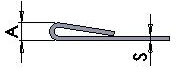
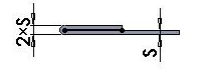
s mm | A | 450Mpa t/m | 700Mpa t/m | s mm | A mm | 450Mpa t/m | 700Mpa t/m |
|---|---|---|---|---|---|---|---|
0.6 | 3.0 | 9 | 15 | 0.6 | 1.2 | 23 | 35 |
0.8 | 3.0 | 12 | 20 | 0.8 | 1.6 | 32 | 50 |
1.0 | 3.5 | 15 | 25 | 1.0 | 2.0 | 40 | 60 |
1.25 | 3.5 | 17 | 26 | 1.25 | 2.5 | 50 | 80 |
1.5 | 4.6 | 22 | 38 | 1.5 | 3.0 | 63 | 95 |
2.0 | 5.5 | 30 | 50 | 2.0 | 4.0 | 80 | 130 |
2.5 | 6.5 | 55 | Cell | 2.5 | 5.0 | 90 | Cell |
3.0 | 8.0 | 70 | Cell | 3.0 | 6.0 | 100 | Cell |
Standard Z-type tooing
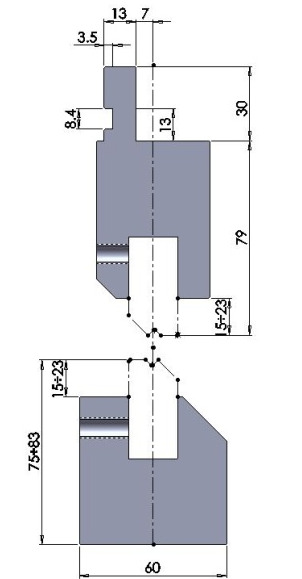
10.270
Max Tons:100t/m
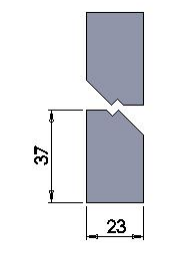
10.271
Max Tons:100t/m
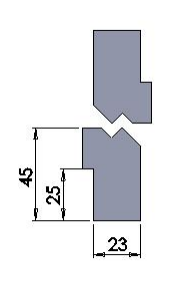
10.272
Max Tons:100t/m
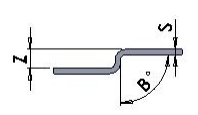
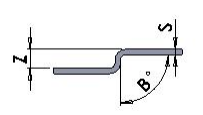
Header | Z mm | B° | s max | max t/m |
|---|---|---|---|---|
Z-1 | 1 | 160° | 0.5 | 100 |
Z-1.5 | 1.5 | 160° | 0.6 | 100 |
Z-2 | 2 | 150° | 0.8 | 100 |
Z-2.5 | 2.5 | 140° | 1.0 | 100 |
Z-3 | 3 | 90° | 1.0 | 100 |
Z-3.5 | 3.5 | 90° | 1.2 | 100 |
Z-4 | 4 | 90° | 1.2 | 100 |
Z-4.5 | 4.5 | 90° | 1.5 | 100 |
Z-5 | 5 | 90° | 1.5 | 100 |
Z-5.5 | 5.5 | 90° | 1.5 | 100 |
Z-6 | 6 | 90° | 1.5 | 100 |
Z-6.5 | 6.5 | 90° | 1.5 | 100 |
Z-7 | 7 | 90° | 2 | 100 |
Z-7.5 | 7.5 | 90° | 2 | 100 |
Z-8 | 8 | 90° | 2.5 | 100 |
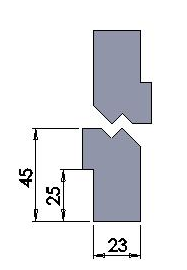
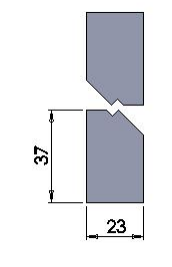
Standard heavy duty direct –link type tooling
10.280
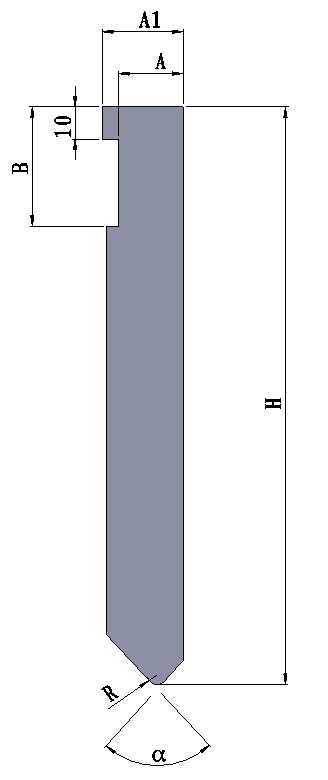
Header | A | A1 | H | B | α | R | max T/m |
|---|---|---|---|---|---|---|---|
1 | 20 | 25 | 180 | 37 | 85° | R3 | 100 |
2 | 25 | 30 | 180 | 42 | 85° | R5 | 120 |
3 | 30 | 35 | 200 | 42 | 85° | R8 | 150 |
4 | 40 | 45 | 200 | 52 | 85° | R10 | 200 |
10.281
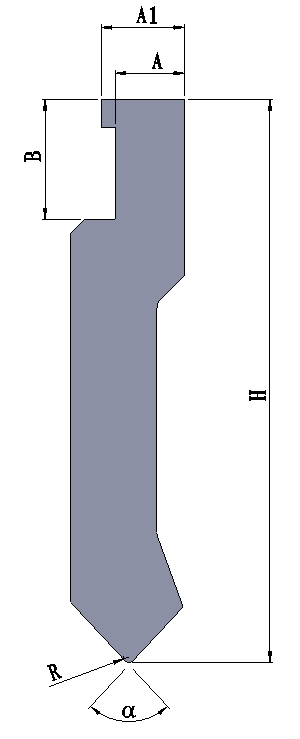
Header | A | A1 | H | B | α | R | max T/m |
|---|---|---|---|---|---|---|---|
1 | 20 | 25 | 180 | 37 | 85° | R3 | 100 |
Header | Z mm | B° | s max | max t/m |
|---|---|---|---|---|
Z-9 | 9 | 90° | 2.5 | 100 |
Z-10 | 10 | 90° | 3 | 100 |
Z-11 | 11 | 90° | 3 | 100 |
Z-12 | 12 | 90° | 3 | 100 |
2 | 25 | 30 | 180 | 42 | 85° | R5 | 120 |
3 | 30 | 35 | 200 | 42 | 85° | R8 | 150 |
4 | 40 | 45 | 200 | 52 | 85° | R10 | 200 |
10.290
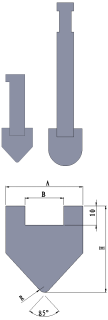
Header | A | B | H | R | α |
|---|---|---|---|---|---|
1 | 40 | 20 | 45 | R3 | 85° |
2 | 45 | 25 | 50 | R3 | 85° |
3 | 50 | 30 | 55 | R5 | 85° |
4 | 55 | 35 | 60 | R5 | 85° |
5 | 60 | 40 | 65 | R8 | 85° |
6 | 70 | 50 | 80 | R10 | 85° |
Accessories of upper tooling
10.300
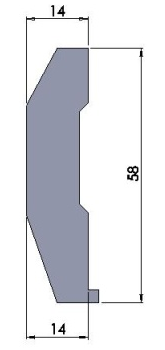
10.303
Max Tons:100t/m
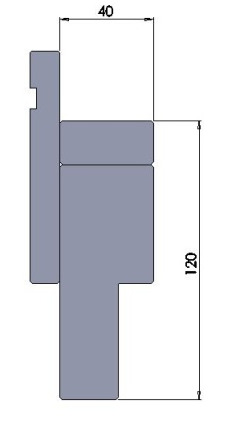
10.306
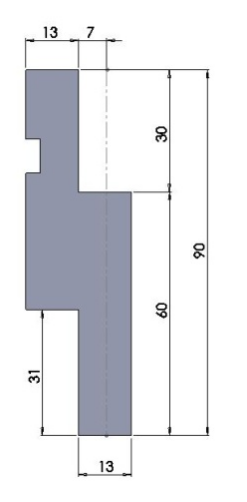
10.301
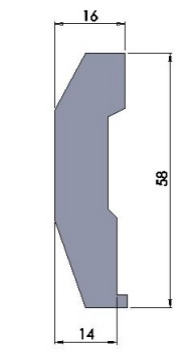
10.304
Max Tons:100t/m
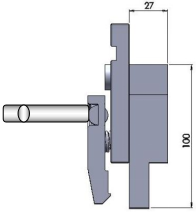
special bending mode
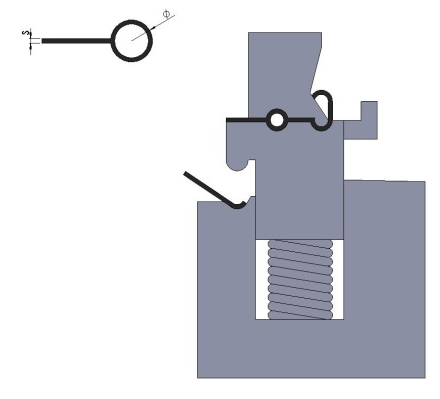
10.302
10.305
Max Tons:100t/m
1V lower dies
20.100
Max Tons:40t/m
20.103
Max Tons:60t/m
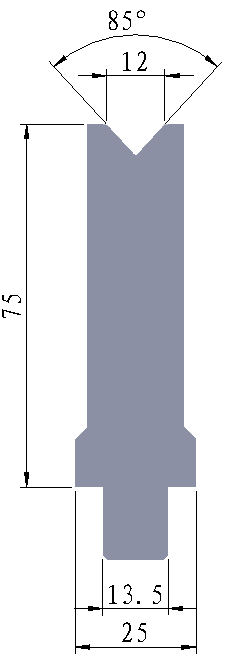
20.106
Max Tons:90t/m
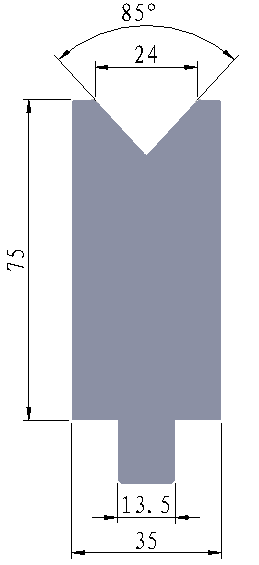
20.101
Max Tons:40t/m
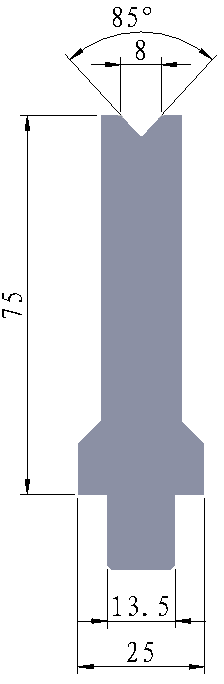
20.104
Max Tons:80t/m
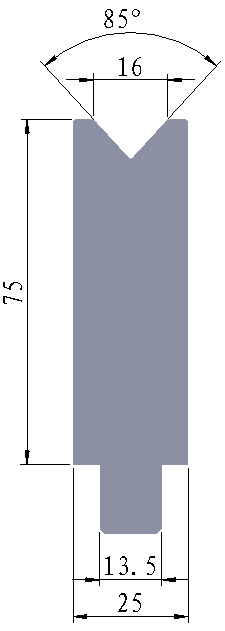
20.107
Max Tons:100t/m
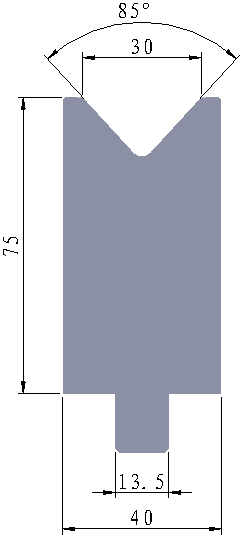
20.102
Max Tons:50t/m
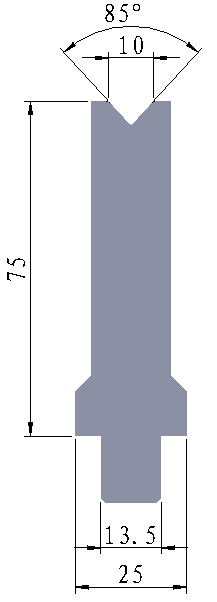
20.105
Max Tons:85t/m
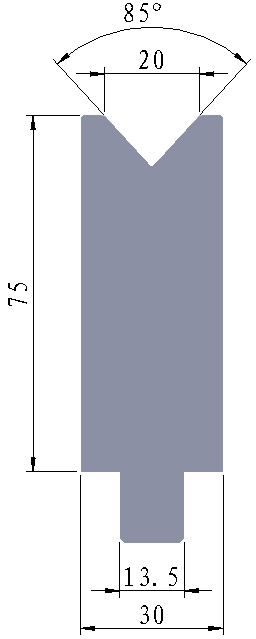
20.108
Max Tons:100t/m
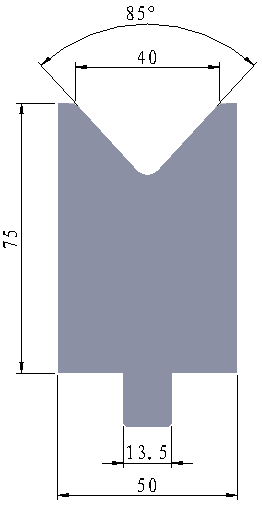
1V lower dies
20.109
Max Tons:100t/m
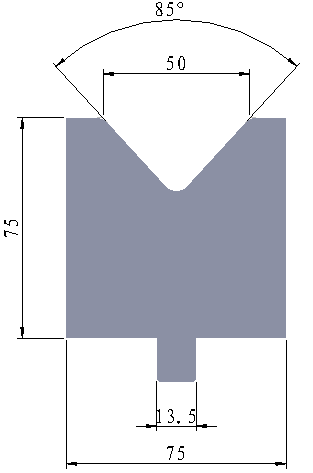
20.112
Max Tons:145t/m
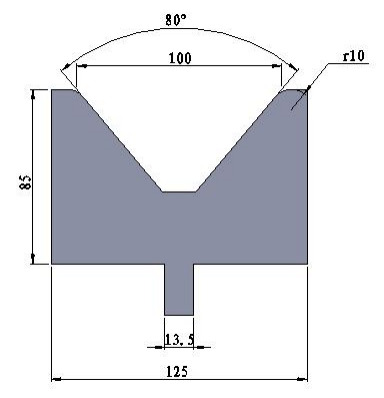
20.110
Max Tons:100t/m
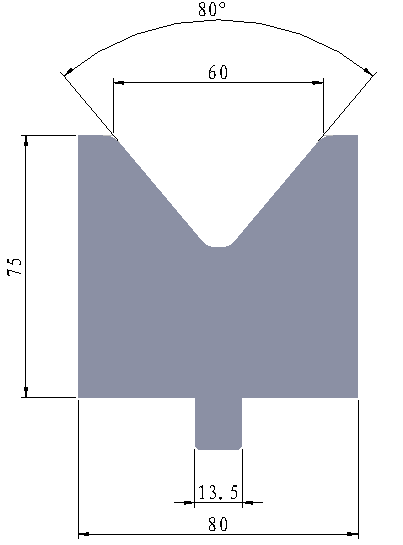
20.120
Max Tons:40t/m
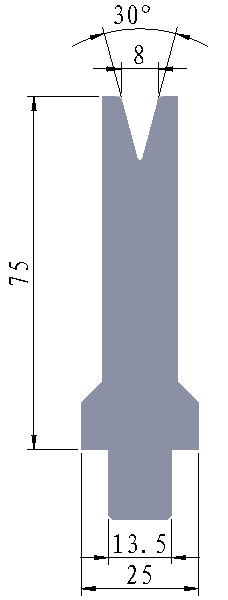
20.111
Max Tons:100t/m
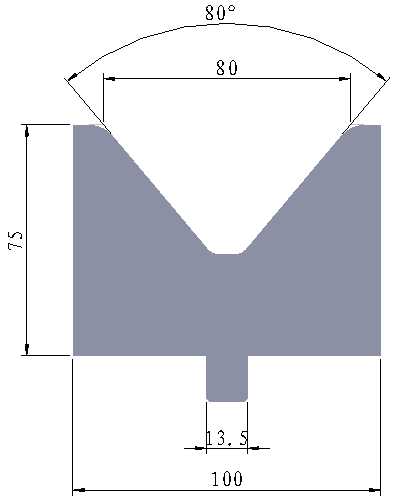
20.121
Max Tons:40t/m
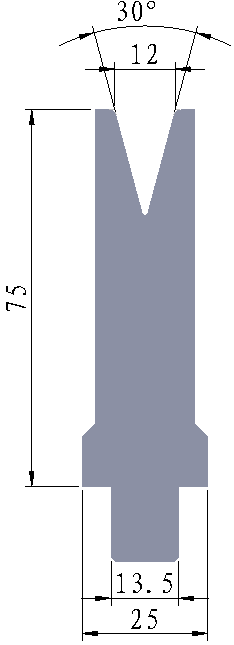
20.122
Max Tons:55t/m
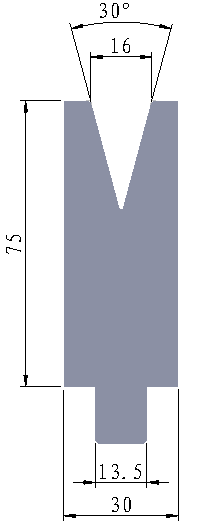
20.123
Max Tons:55t/m
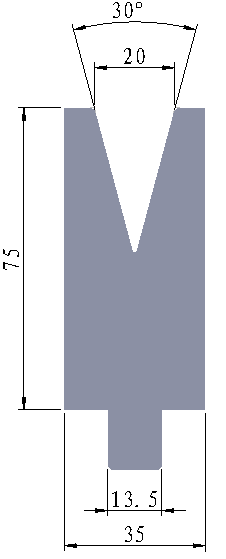
20.124
Max Tons:60t/m
1V lower dies
20.125
Max Tons:40t/m
20.126
Max Tons:40t/m
20.127
Max Tons:40t/m
20.128
Max Tons:40t/m
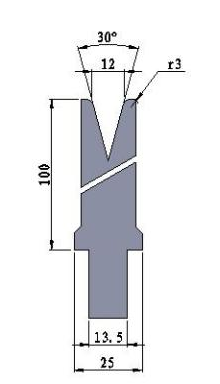
20.129
Max Tons:55t/m
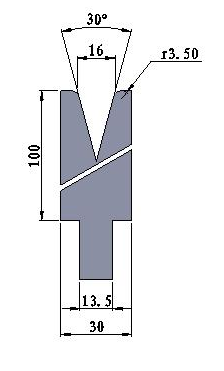
20.130
Max Tons:55t/m
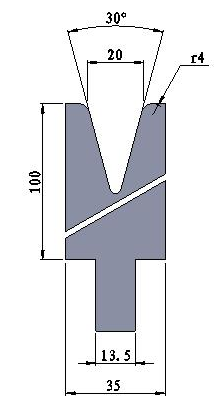
20.131
Max Tons:60t/m
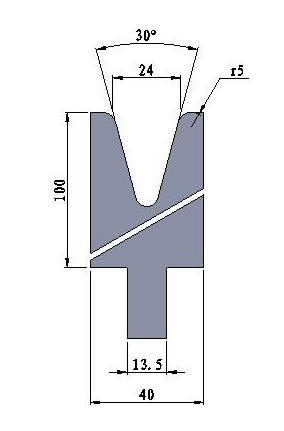
20.132
Max Tons:50t/m
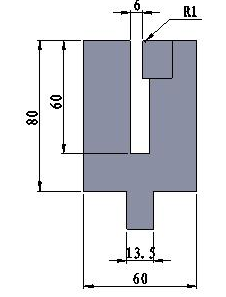
20.133
Max Tons:50t/m
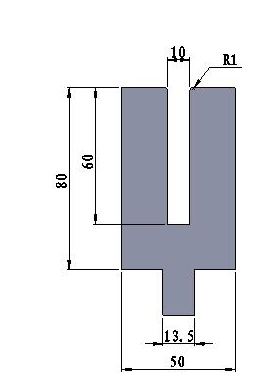
1V lower dies
20.140
Max Tons:95t/m
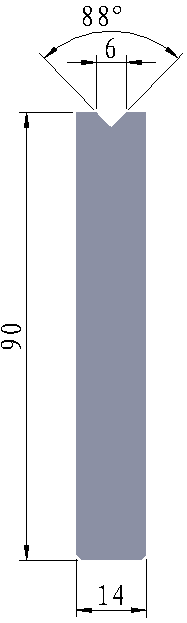
20.143
Max Tons:95t/m
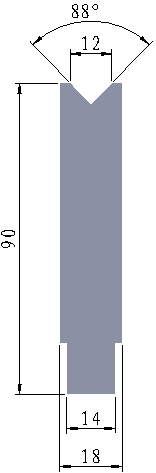
20.146
Max Tons:95t/m
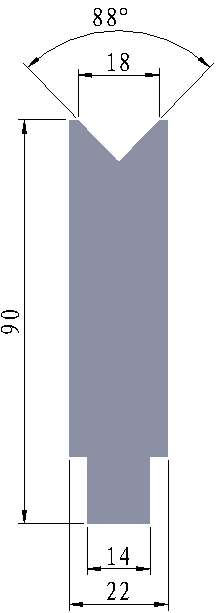
20.141
Max Tons:95t/m
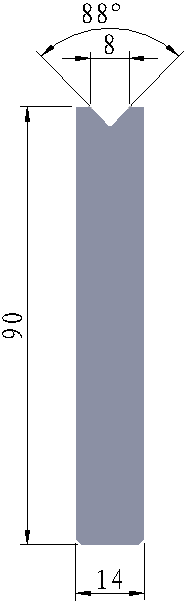
20.144
Max Tons:95t/m
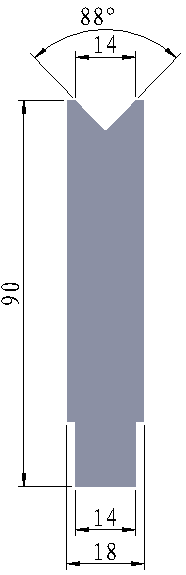
20.147
Max Tons:95t/m
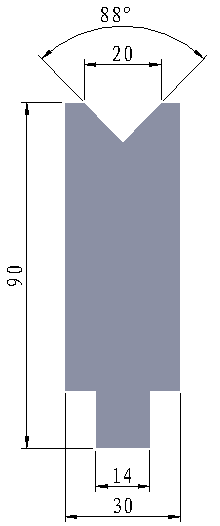
20.142
Max Tons:95t/m
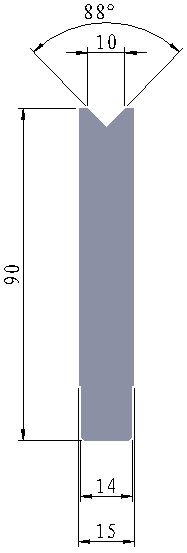
20.145
Max Tons:95t/m
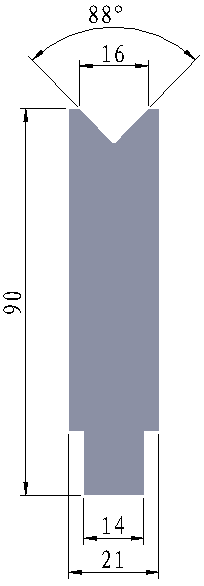
20.148
Max Tons:95t/m
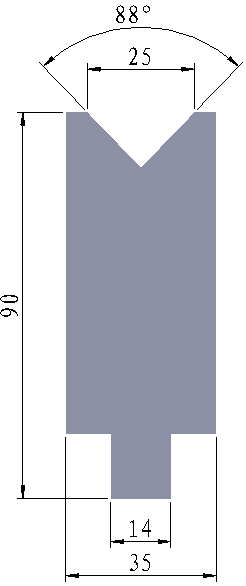
1V lower dies
20.160
Max Tons:60t/m
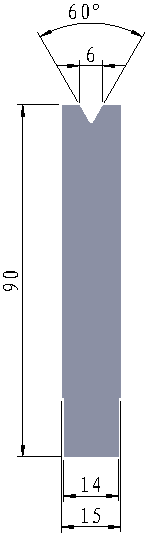
20.164
Max Tons:70t/m
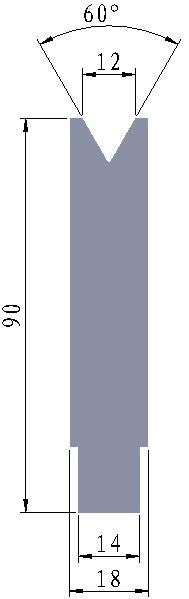
20.167
Max Tons:70t/m
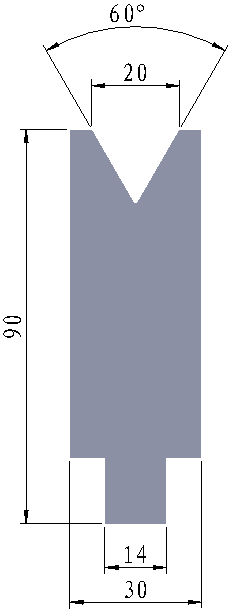
20.161
Max Tons:65t/m
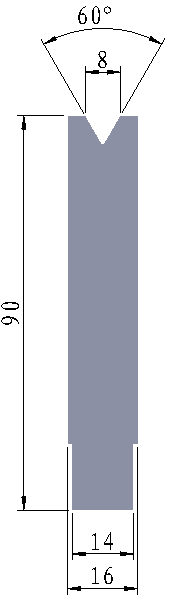
20.165
Max Tons:70t/m
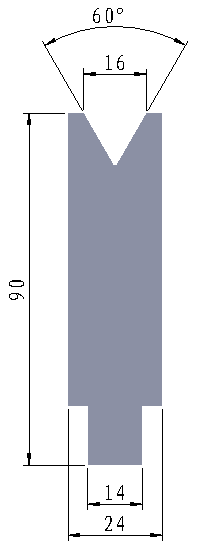
20.168
Max Tons:65t/m
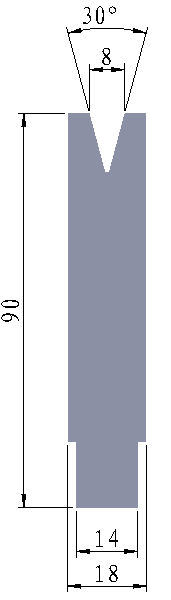
20.163
Max Tons:70t/m
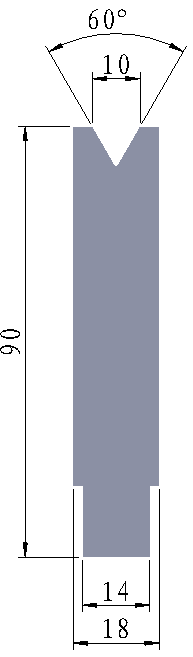
20.166
Max Tons:70t/m
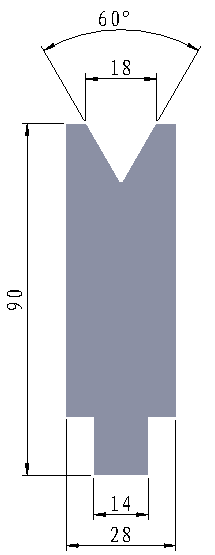
20.169
Max Tons:70t/m
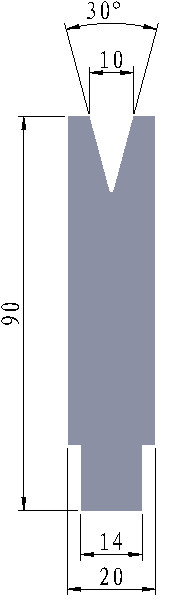
1V lower dies
20.170
Max Tons:70t/m
20.173
Max Tons:95t/m
20.171
Max Tons:70t/m
20.174
Max Tons:95t/m
20.172
Max Tons:70t/m
20.175
Max Tons:95t/m
Segmentation of lower tools
1V lower dies
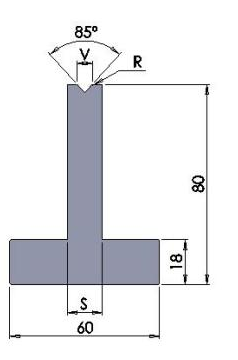
Header | Vmm | Rmm | Smm | max t/m |
|---|---|---|---|---|
T6 | 6 | 0.4 | 14 | 100 |
T8 | 8 | 0.5 | 14 | 100 |
T10 | 10 | 0.8 | 18 | 100 |
T12 | 12 | 2.75 | 18 | 100 |
T16 | 16 | 2.75 | 24 | 100 |
T20 | 20 | 3 | 30 | 100 |
T25 | 25 | 3 | 35 | 100 |
TR6 | 6 | 2.75 | 14 | 100 |
TR8 | 8 | 2.75 | 14 | 100 |
TR10 | 10 | 2.75 | 18 | 100 |
20.350/Tx
Max Tons:100t/m
20.351/Tx
Max Tons:100t/m
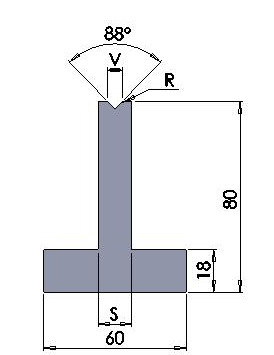
Header | Vmm | Rmm | Smm | max t/m |
|---|---|---|---|---|
T6 | 6 | 0.5 | 14 | 60 |
T8 | 8 | 0.5 | 14 | 60 |
T10 | 10 | 0.8 | 18 | 60 |
T12 | 12 | 0.8 | 18 | 60 |
T16 | 16 | 2.75 | 24 | 60 |
T20 | 20 | 3 | 30 | 60 |
T25 | 25 | 3 | 35 | 60 |
TR6 | 6 | 1.5 | 14 | 60 |
TR8 | 8 | 1.5 | 14 | 60 |
TR10 | 10 | 2.75 | 18 | 60 |
TR12 | 12 | 2.75 | 18 | 60 |
20.352/Tx
Max Tons:60t/m
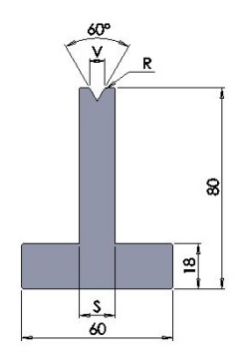
20.353/Tx
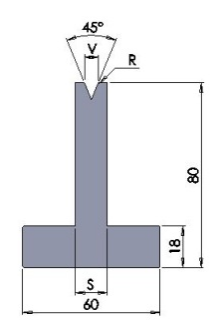
20.354/Tx
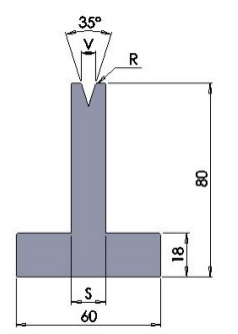
20.355/Tx
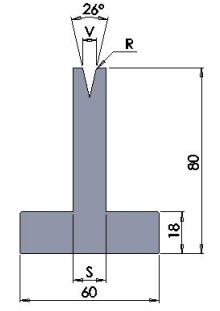
Header | Vmm | Rmm | Smm | max t/m |
|---|---|---|---|---|
T6 | 6 | 0.8 | 14 | 50 |
T8 | 8 | 1 | 18 | 50 |
T10 | 10 | 1.2 | 18 | 50 |
T12 | 12 | 1.6 | 24 | 50 |
T16 | 16 | 2.75 | 26 | 50 |
T20 | 20 | 3 | 30 | 50 |
T25 | 25 | 3 | 37 | 50 |
Header | Vmm | Rmm | Smm | max t/m |
|---|---|---|---|---|
T6 | 6 | 0.8 | 14 | 35 |
T8 | 8 | 1 | 16 | 35 |
T10 | 10 | 1.2 | 20 | 40 |
T12 | 12 | 1.6 | 22 | 40 |
T16 | 16 | 3 | 30 | 45 |
T20 | 20 | 3 | 35 | 50 |
T25 | 25 | 3 | 40 | 50 |
Header | Vmm | Rmm | Smm | max t/m |
|---|---|---|---|---|
T6 | 6 | 0.8 | 16 | 20 |
T8 | 8 | 1 | 20 | 20 |
T10 | 10 | 1.2 | 24 | 20 |
T12 | 12 | 1.6 | 26 | 20 |
Cell | Cell | Cell | Cell | Cell |
Cell | Cell | Cell | Cell | Cell |
Cell | Cell | Cell | Cell | Cell |
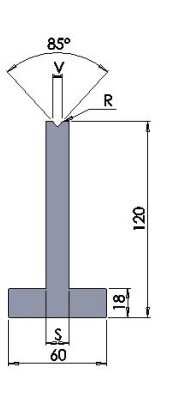
1V lower dies
Header | Vmm | Rmm | Smm | max t/m |
|---|---|---|---|---|
T6 | 6 | 0.4 | 14 | 100 |
T8 | 8 | 0.5 | 14 | 100 |
T10 | 10 | 0.8 | 18 | 100 |
T12 | 12 | 2.75 | 18 | 100 |
T16 | 16 | 2.75 | 24 | 100 |
T20 | 20 | 3 | 30 | 100 |
T25 | 25 | 3 | 35 | 100 |
TR6 | 6 | 2.75 | 14 | 100 |
TR8 | 8 | 2.75 | 14 | 100 |
TR10 | 10 | 2.75 | 18 | 100 |
20.356/Tx
Max Tons:100t/m
20.357/Tx
Max Tons:100t/m
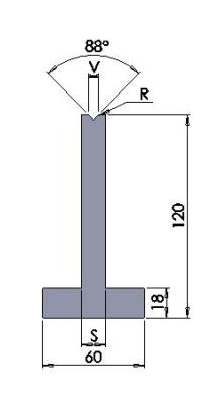
Header | Vmm | Rmm | Smm | max t/m |
|---|---|---|---|---|
T6 | 6 | 0.5 | 14 | 60 |
T8 | 8 | 0.5 | 14 | 60 |
T10 | 10 | 0.8 | 18 | 60 |
T12 | 12 | 0.8 | 18 | 60 |
T16 | 16 | 2.75 | 24 | 60 |
T20 | 20 | 3 | 30 | 60 |
T25 | 25 | 3 | 35 | 60 |
TR6 | 6 | 1.5 | 14 | 60 |
TR8 | 8 | 1.5 | 14 | 60 |
TR10 | 10 | 2.75 | 18 | 60 |
TR12 | 12 | 2.75 | 18 | 60 |
20.358/Tx
Max Tons:60t/m
20.359/Tx
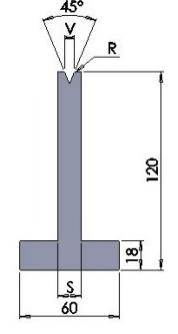
20.360/Tx
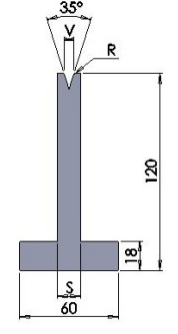
20.361/Tx
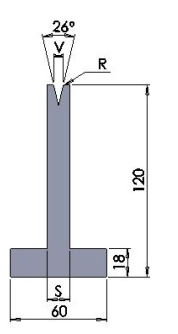
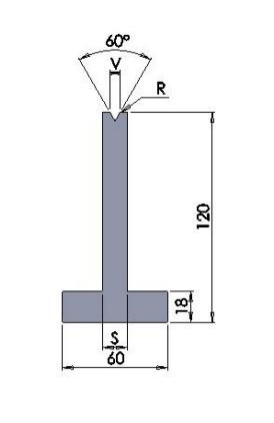
Header | Vmm | Rmm | Smm | max t/m |
|---|---|---|---|---|
T6 | 6 | 0.8 | 14 | 50 |
T8 | 8 | 1 | 18 | 50 |
T10 | 10 | 1.2 | 18 | 50 |
T12 | 12 | 1.6 | 24 | 50 |
T16 | 16 | 2.75 | 26 | 50 |
T20 | 20 | 3 | 30 | 50 |
T25 | 25 | 3 | 37 | 50 |
Header | Vmm | Rmm | Smm | max t/m |
|---|---|---|---|---|
T6 | 6 | 0.8 | 14 | 35 |
T8 | 8 | 1 | 16 | 35 |
T10 | 10 | 1.2 | 20 | 40 |
T12 | 12 | 1.6 | 22 | 40 |
T16 | 16 | 3 | 30 | 45 |
T20 | 20 | 3 | 35 | 50 |
T25 | 25 | 3 | 40 | 50 |
Header | Vmm | Rmm | Smm | max t/m |
|---|---|---|---|---|
T6 | 6 | 0.8 | 16 | 20 |
T8 | 8 | 1 | 20 | 20 |
T10 | 10 | 1.2 | 24 | 20 |
T12 | 12 | 1.6 | 26 | 20 |
Cell | Cell | Cell | Cell | Cell |
Cell | Cell | Cell | Cell | Cell |
Cell | Cell | Cell | Cell | Cell |
1V lower dies
20.400
Max Tons:100t/m

20.403
Max Tons:100t/m
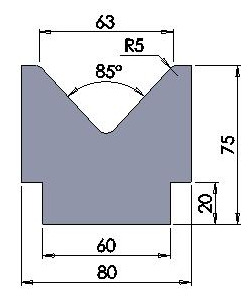
20.411
Max Tons:100t/m
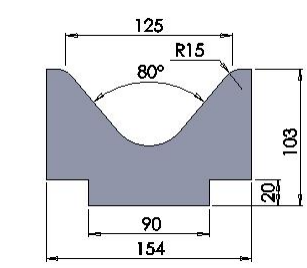
20.401
Max Tons:100t/m
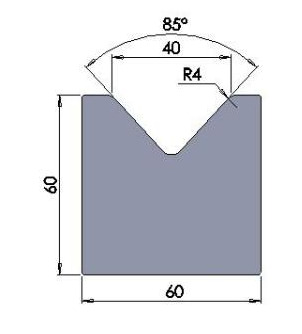
20.404
Max Tons:100t/m
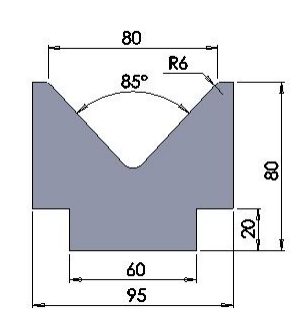
20.412
Max Tons:100t/m
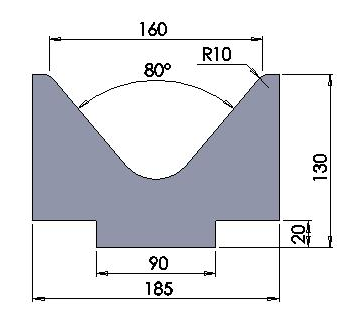
20.402
Max Tons:100t/m
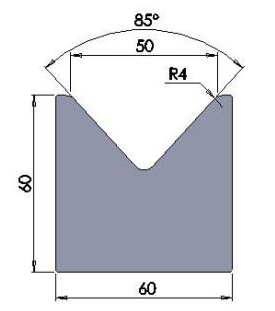
20.410
Max Tons:100t/m
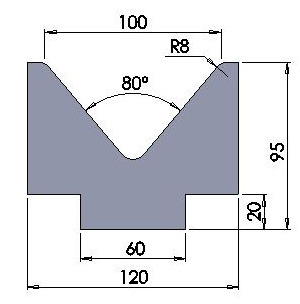
20.420
Max Tons:100t/m
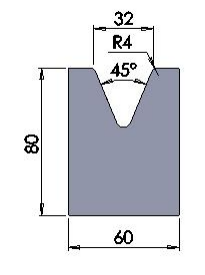
1V lower dies
20.421
Max Tons:100t/m
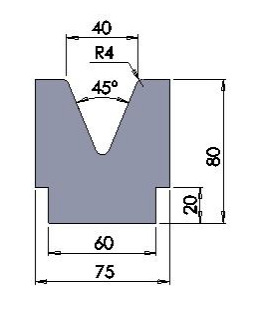
20.431
Max Tons:100t/m
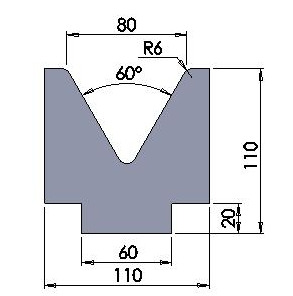
20.422
Max Tons:100t/m
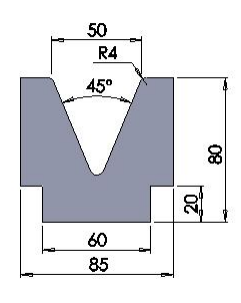
20.440
Max Tons:80t/m
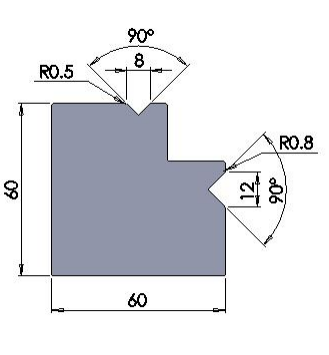
20.430
Max Tons:100t/m
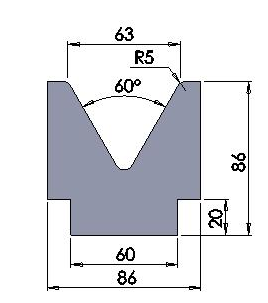
20.441
Max Tons:80t/m
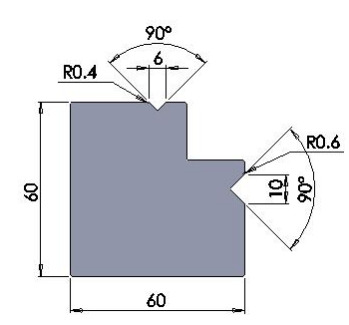
Segmentation of lower dies
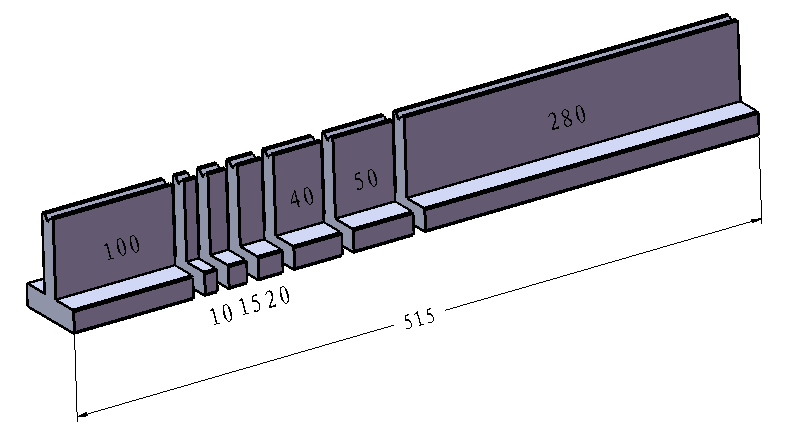
1V lower dies
Low Friction Dies
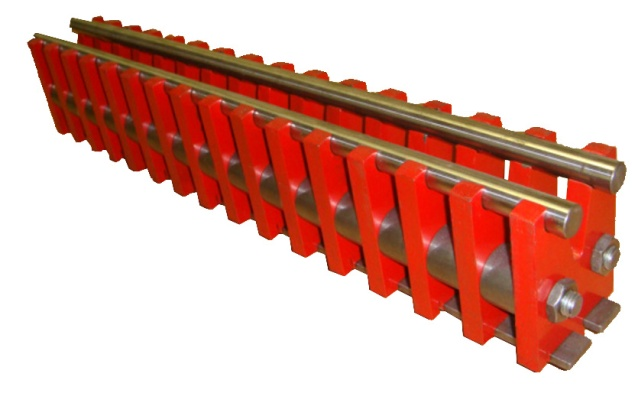
20.181~20.186
Compound dies are press brake dies for “airbending” only.
Minimal marking on the bend parts.
The die bars are interchangeble in case of wear.
Choose of optimal radius material, Bronze or non metalic bars can be supplied for special application, The bars can be TIN coated for longer life and less friction
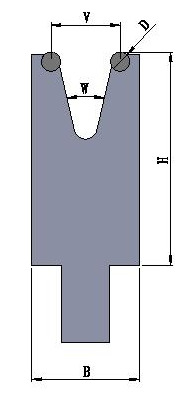
Header | V mm | D mm | W (°) | B mm | H mm | Max Tons t/m |
|---|---|---|---|---|---|---|
20.181 | 8 | 3 | 30 | 20 | 75 | 20 |
20.182 | 12 | 4 | 30 | 24 | 75 | 30 |
20.183 | 16 | 5 | 30 | 28 | 75 | 40 |
20.184 | 20 | 5 | 30 | 32 | 75 | 45 |
20.185 | 24 | 6 | 30 | 40 | 75 | 50 |
20.186 | 32 | 8 | 60 | 52 | 75 | 60 |
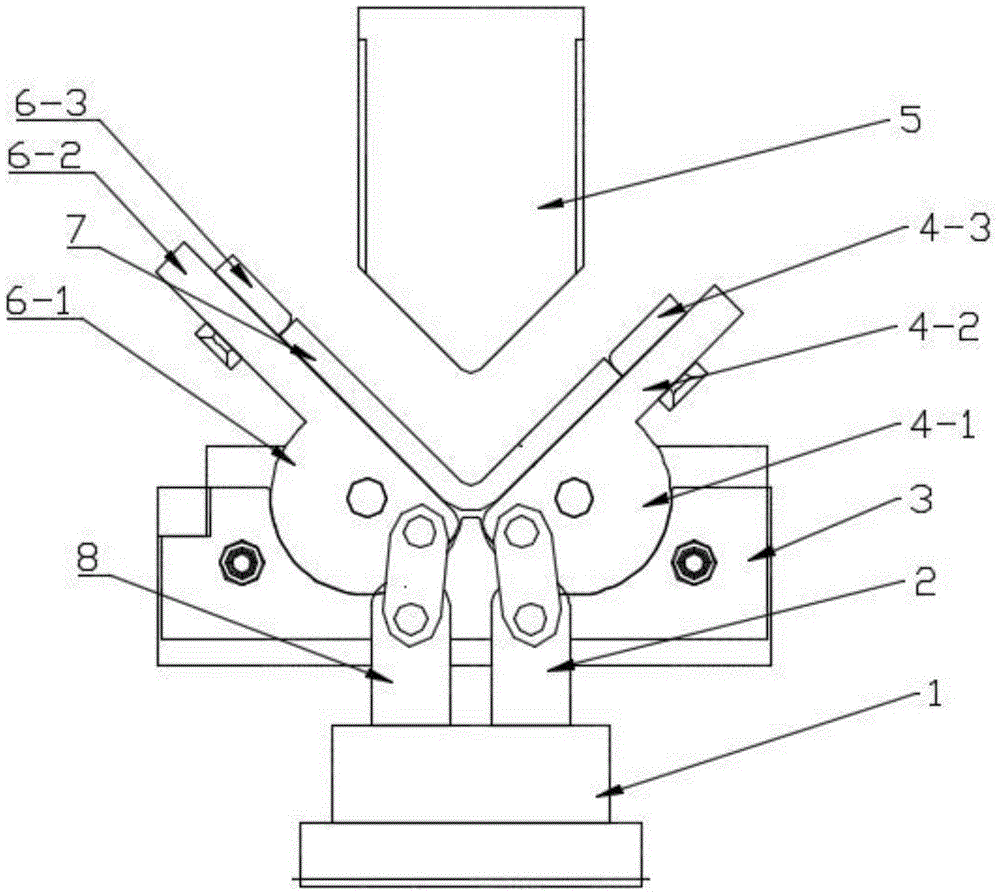
Another type of seamless lower mold
1V lower dies
Low Friction Dies
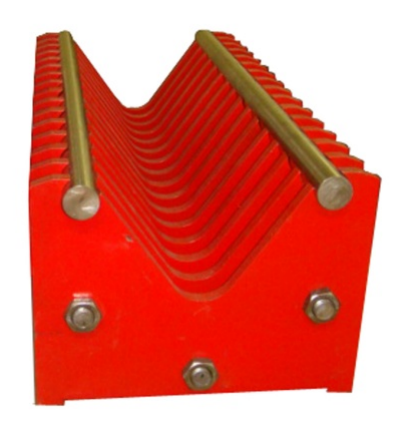
20.191~20.204
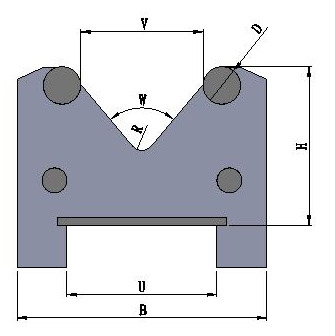
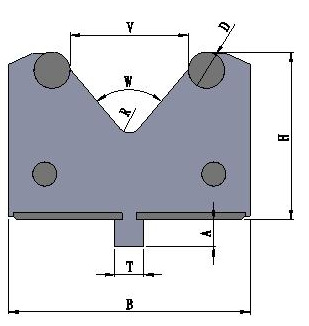

Header | V mm | D mm | W (°) | B mm | H mm | R mm | Max Tons t/m |
|---|---|---|---|---|---|---|---|
20.191 | 32 | 10 | 28 | 53 | 75 | 5 | 50 |
20.192 | 32 | 10 | 85 | 53 | 75 | 5 | 70 |
20.193 | 40 | 10 | 85 | 62 | 75 | 5 | 80 |
20.194 | 48 | 10 | 85 | 70 | 75 | 5 | 90 |
20.195 | 50 | 15 | 40 | 85 | 90 | 7 | 80 |
20.196 | 60 | 15 | 40 | 110 | 110 | 10 | 100 |
20.197 | 80 | 20 | 50 | 150 | 130 | 10 | 120 |
20.198 | 100 | 20 | 60 | 170 | 140 | 18 | 150 |
20.199 | 120 | 25 | 60 | 190 | 160 | 18 | 180 |
20.200 | 150 | 25 | 60 | 235 | 180 | 25 | 200 |
20.201 | 200 | 30 | 80 | 300 | 220 | 30 | 250 |
20.202 | 250 | 30 | 80 | 350 | 300 | 40 | 300 |
20.203 | 300 | 40 | 80 | 440 | 360 | 40 | 400 |
20.204 | 400 | 50 | 80 | 570 | 400 | 50 | 500 |
2V lower dies
20.220
Max Tons:70t/m
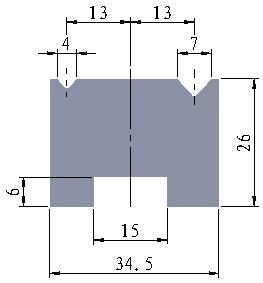
20.223
Max Tons:80t/m
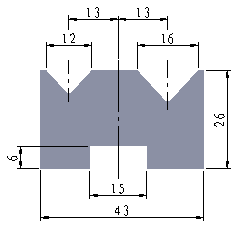
20.221
Max Tons:80t/m
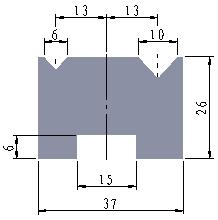
20.224
Max Tons:80t/m
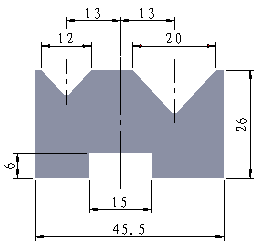
20.222
Max Tons:80t/m
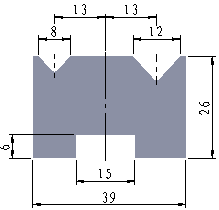
20.225
Max Tons:80t/m
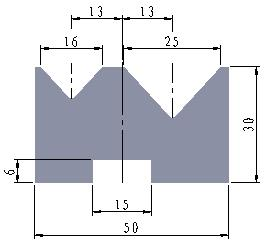
20.230
Max Tons:60t/m
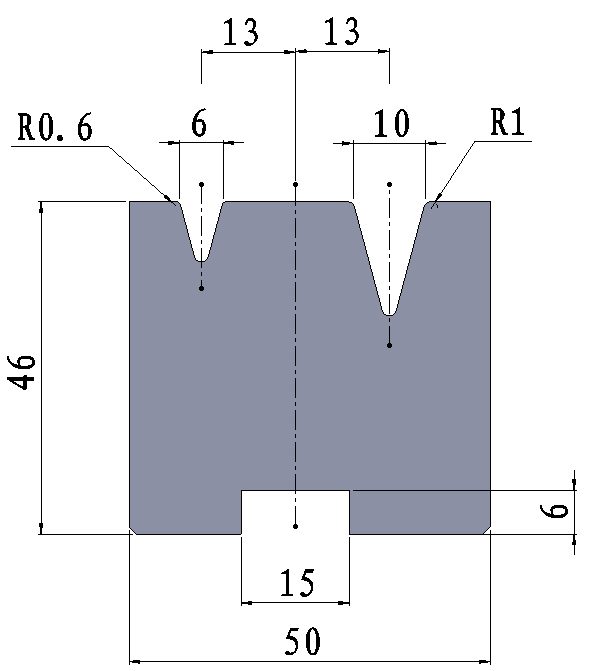
20.231
Max Tons:60t/m
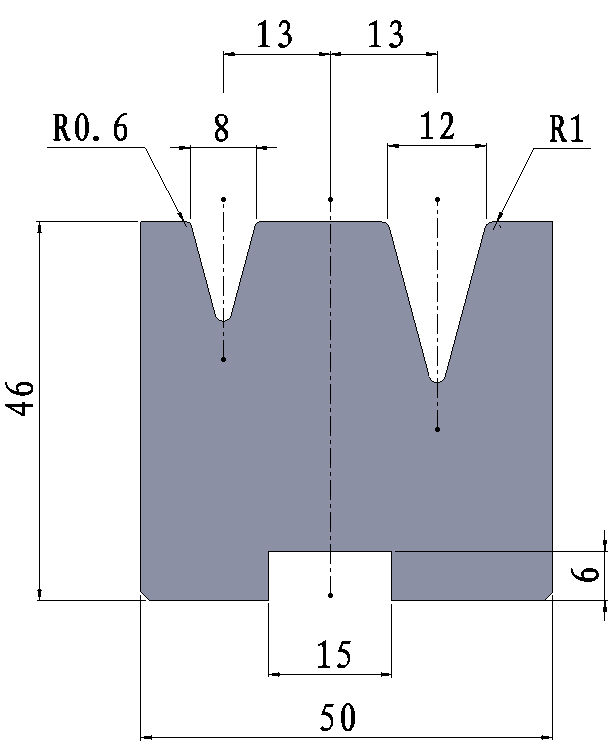
20.232
Max Tons:100t/m
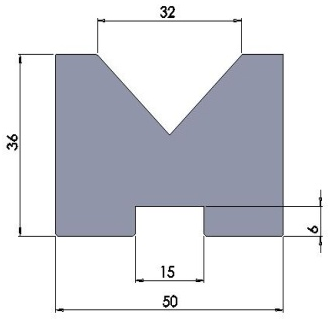
2V lower dies
20.233
Max Tons:100t/m
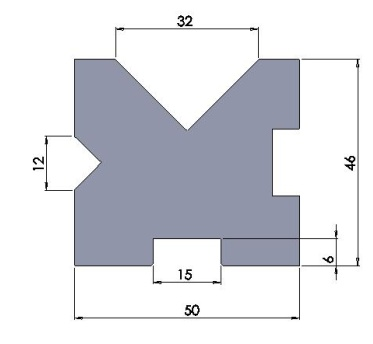
20.236
Max Tons:100t/m
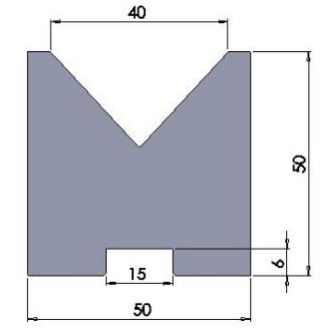
20.239
Max Tons:1000t/m
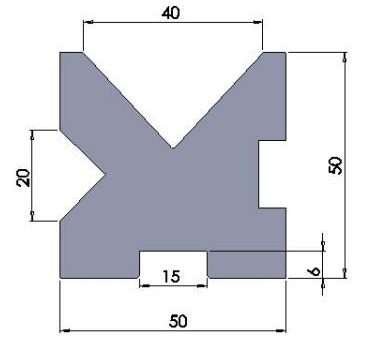
20.234
Max Tons:100t/m
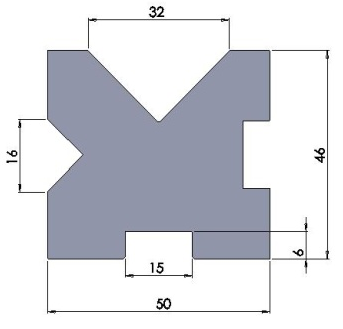
20.237
Max Tons:100t/m
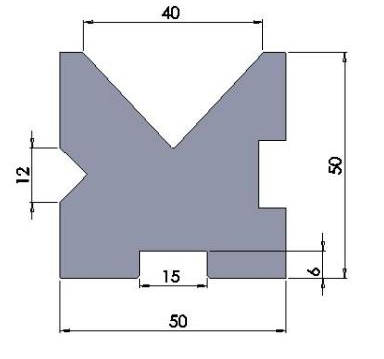
20.235
Max Tons:100t/m
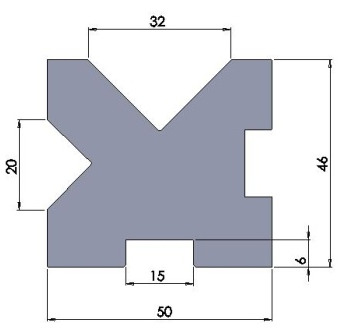
20.238
Max Tons:100t/m
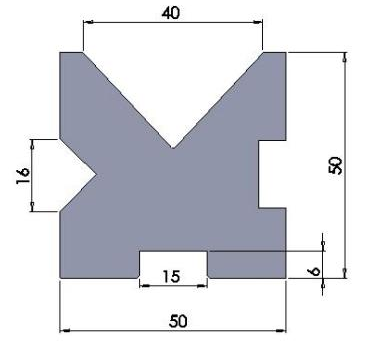
2V lower dies
20.250
Max Tons:80t/m
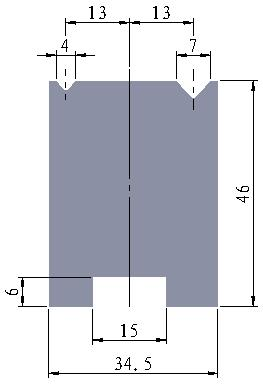
20.253
Max Tons:80t/m
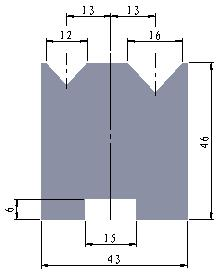
20.251
Max Tons:80t/m
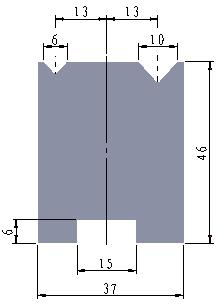
20.254
Max Tons:80t/m
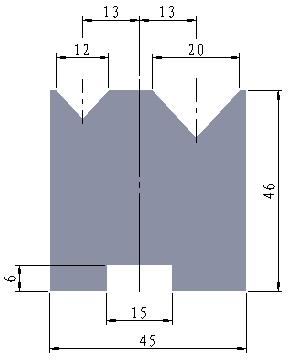
20.252
Max Tons:80t/m
20.255
Max Tons:80t/m
multi-V lower dies
20.500
20.503
20.506
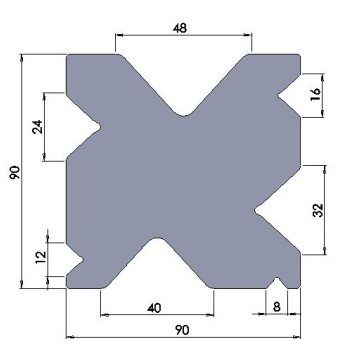
20.501
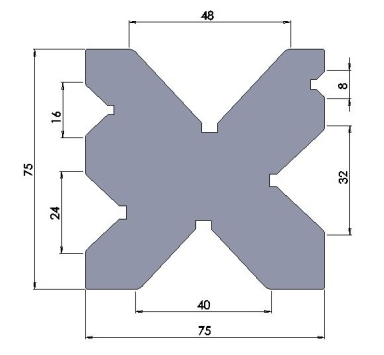
20.504
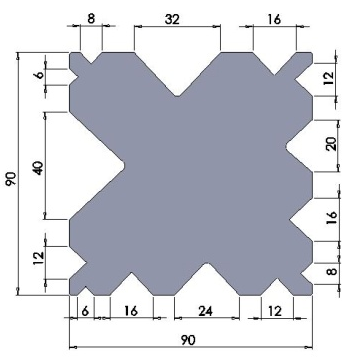
20.507

20.502
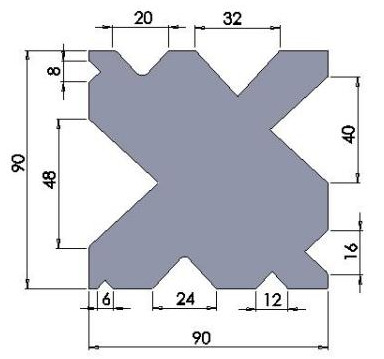
20.505
20.508
multi-V lower dies
20.509
20.512
20.515
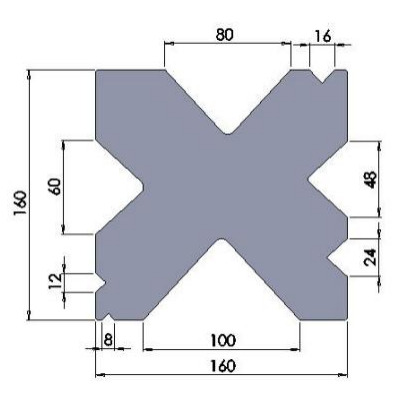
20.510
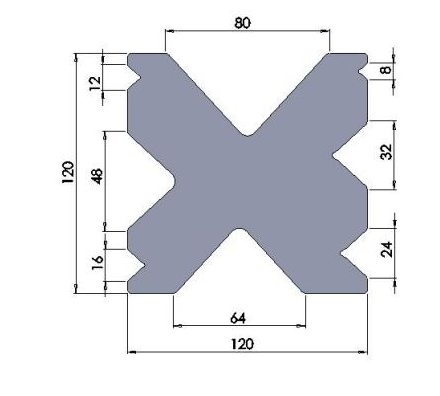
20.513
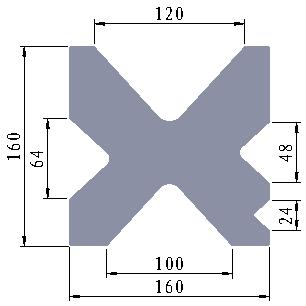
20.516
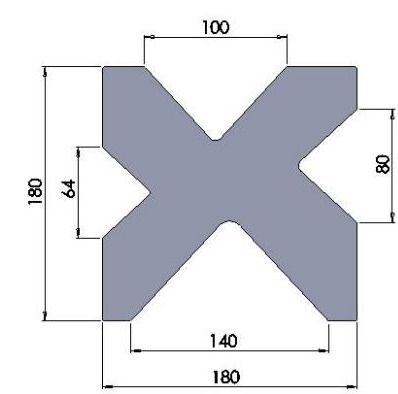
20.511
20.514
20.517
multi-V lower dies
20.530
20.541
20.531
20.550
20.540
20.551
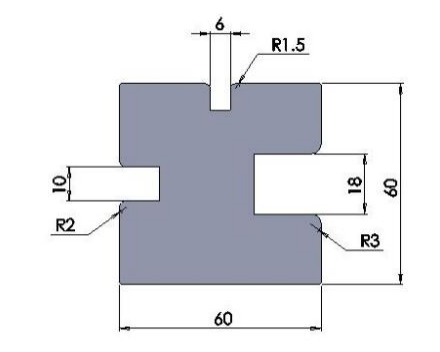
Combined dies
20.560
Max Tons:200t/m
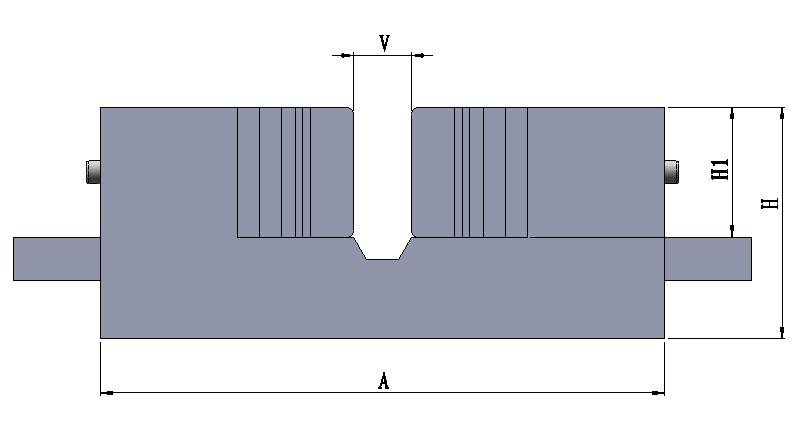
Code | Vmax | A | H | H1 |
|---|---|---|---|---|
1 | 200 | 390 | 160 | 90 |
2 | 240 | 460 | 190 | 110 |
3 | 280 | 540 | 220 | 130 |
4 | 320 | 620 | 250 | 150 |
5 | 360 | 700 | 260 | 160 |
6 | 400 | 800 | 290 | 180 |
Accessories of lower dies
20.600
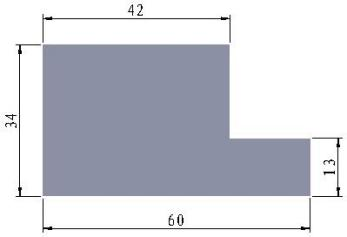
20.603
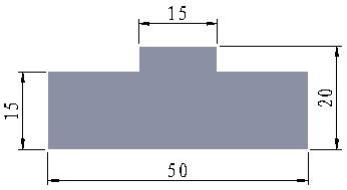
20.606
20.601
20.604
20.607
20.602
20.605
20.608
Accessories of lower dies
20.609
20.612
20.615

20.610
20.613
20.616
20.611
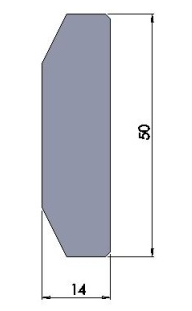
20.614
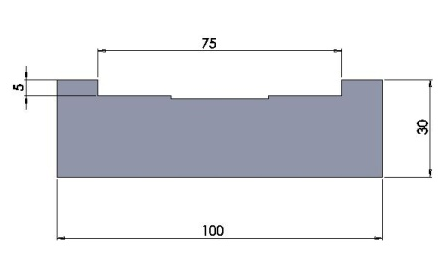
20.617
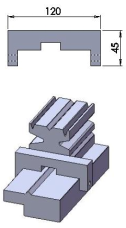
Accessories of lower dies
Mechanical crowning table
20.700
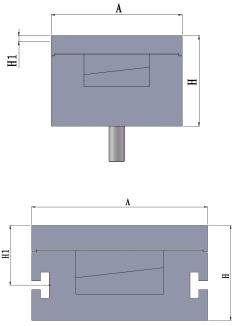
Code | A | H | H1 | T type bolt | Application scope |
|---|---|---|---|---|---|
1 | 90 | 110 | 9 | 50T~220T | |
2 | 200 | 110 | 60 | M12 | 110T~160T |
3 | 240 | 120 | 60 | M12 | 220T~300T |
4 | 320 | 140 | 60 | M12 | 300T~500T |
5 | 400 | 150 | 100 | M20 | 500T~630T |
6 | 480 | 150 | 100 | M20 | 800T~1000T |
7 | 560 | 175 | 120 | M24 | 1000T~1200T |
8 | 640 | 195 | 120 | M24 | 1200T~1600T |
9 | 720 | 195 | 120 | M24 | 1600T~2000T |
10 | 820 | 220 | 135 | M24 | 2000T~2500T |